Vintage Skirts, Decoded: Mini, Midi, Maxi, Denim and the Subcultures That Made Them

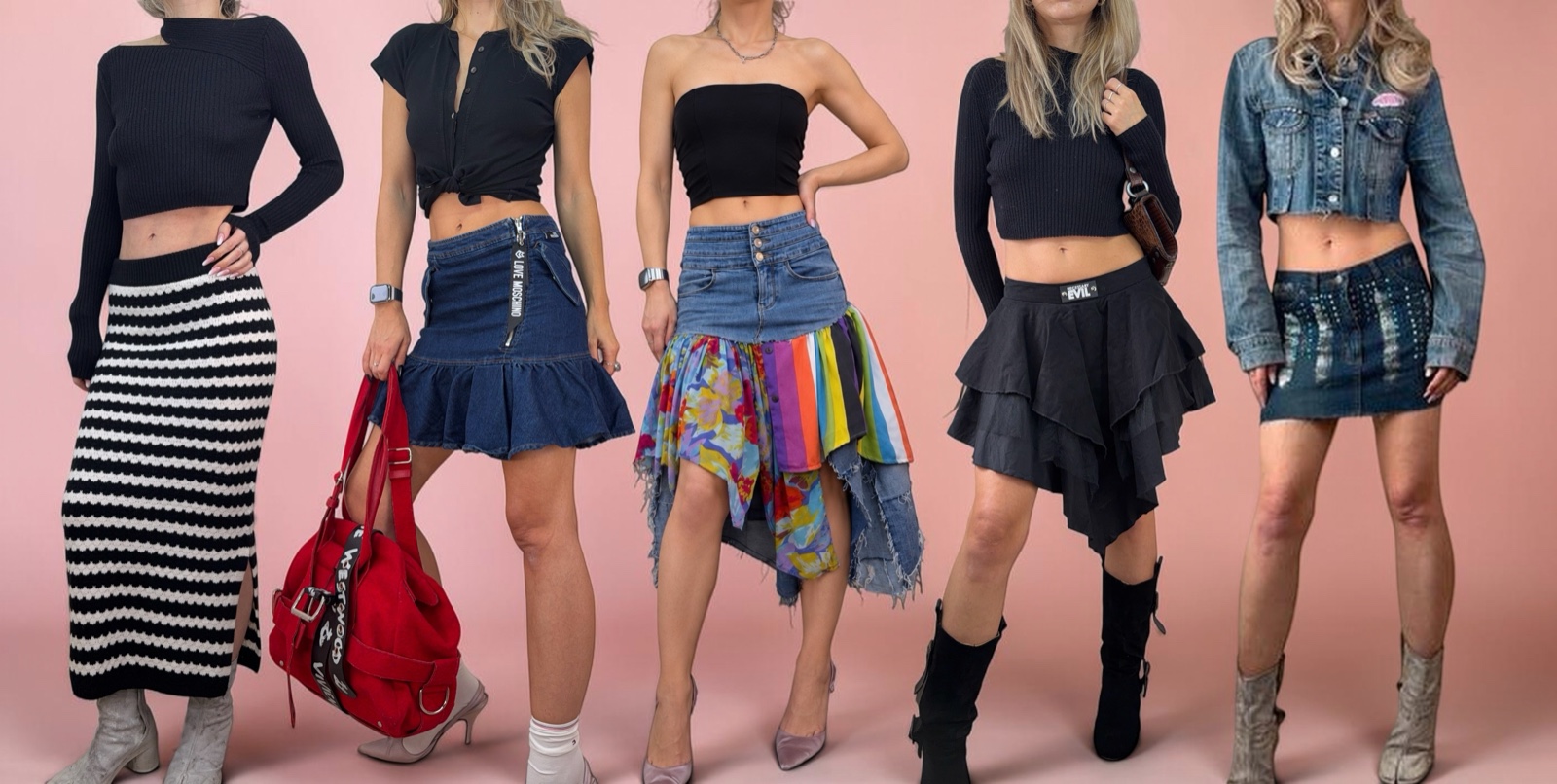
In the photo above: a striped crochet maxi, the Love Moschino ruffled denim mini with a red Vivienne Westwood bag, the custom Miss Sixty patchwork denim and rainbow midi, a Necessary Evil ruffle mini, and the Zoe studded denim micro with the custom Miss Sixty cropped denim jacket.
UK delivery from this site · prices in GBP · Outside the UK? Find our pieces on eBay and Vestiaire Collective, which ship internationally.
A skirt tells you more about its decade than almost anything else in a vintage rail. The length, the cut and the fabric change with every generation, and every subculture has had its own: the punk kilt, the rock leather mini, the romantic lace midi, the Y2K denim micro.
I have had a lot of skirts through my hands, and more are on the way. This is how I tell the types apart, where each one comes from, and how they fit when the label is from another country or another decade.
Short version: a mini ends well above the knee, a midi around mid-calf and a maxi at the ankle. The miniskirt was made famous by Mary Quant in 1960s London; the maxi came from the late-60s hippie movement; the midi was pushed by the fashion industry in 1970. On vintage skirts, ignore the size on the label and go by the waist measurement and the length, because sizing has changed and many skirts were cut to sit lower or higher on the body than today.
Where the mini, midi and maxi come from
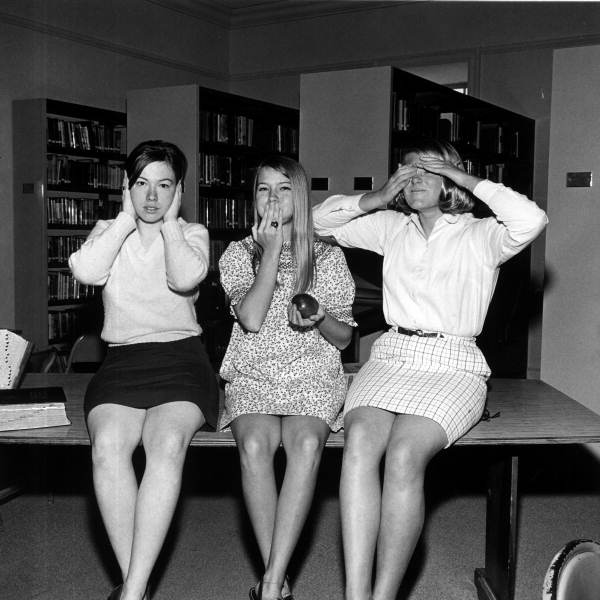
The 1960s: the miniskirt
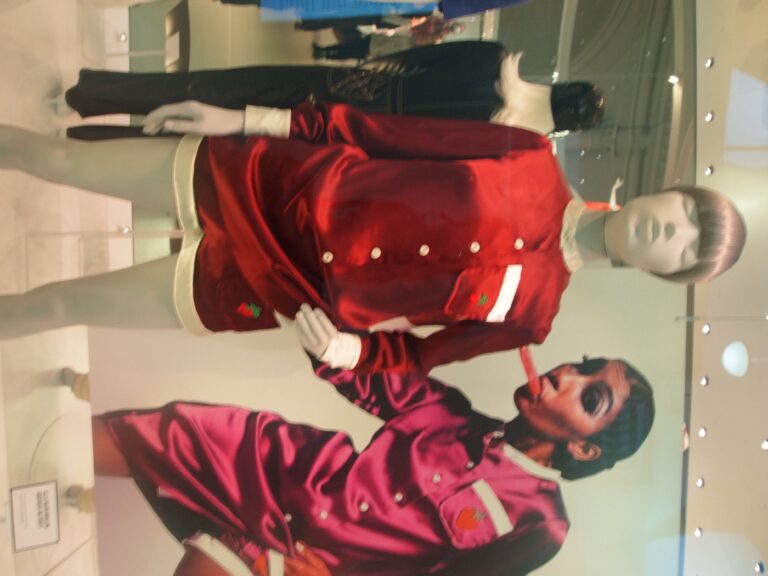
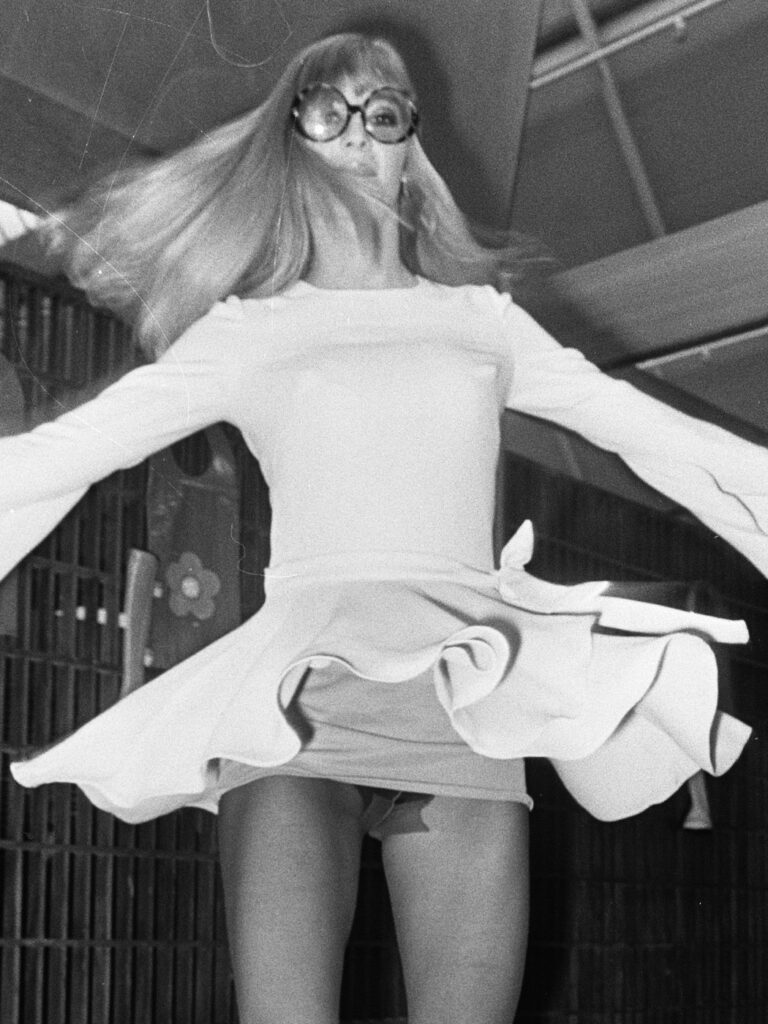
Short skirts existed before, but the miniskirt as we know it belongs to Mary Quant and her shop on the King’s Road in Chelsea. In the mid-1960s she sold skirts that stopped several inches above the knee, cheap enough for young women to buy on a shop assistant’s wage. She named it after her favourite car, the Mini.
In Paris, André Courrèges showed short dresses in his 1964 collection, and the two are still argued over as the inventor. But Courrèges was couture, expensive and made for a few. Quant put the mini on the street, in bright colours and new materials, and that is why it became the symbol of Swinging London.
The 1970s: the maxi and the midi
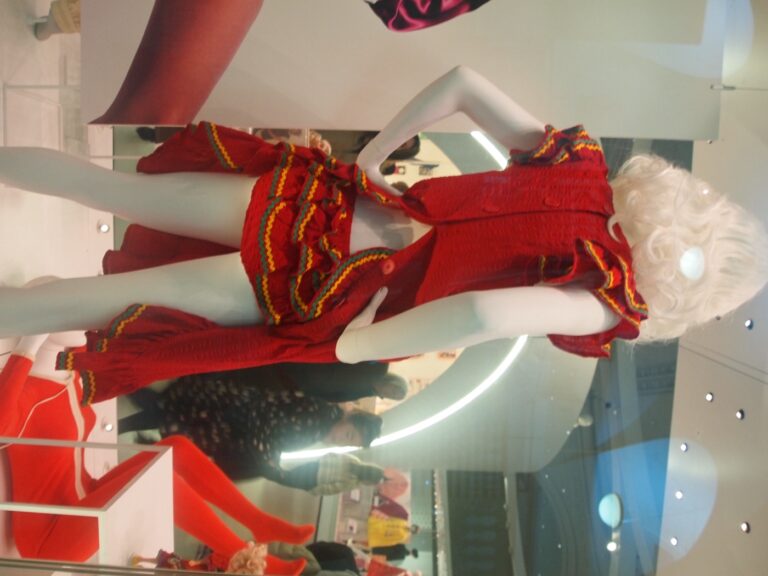
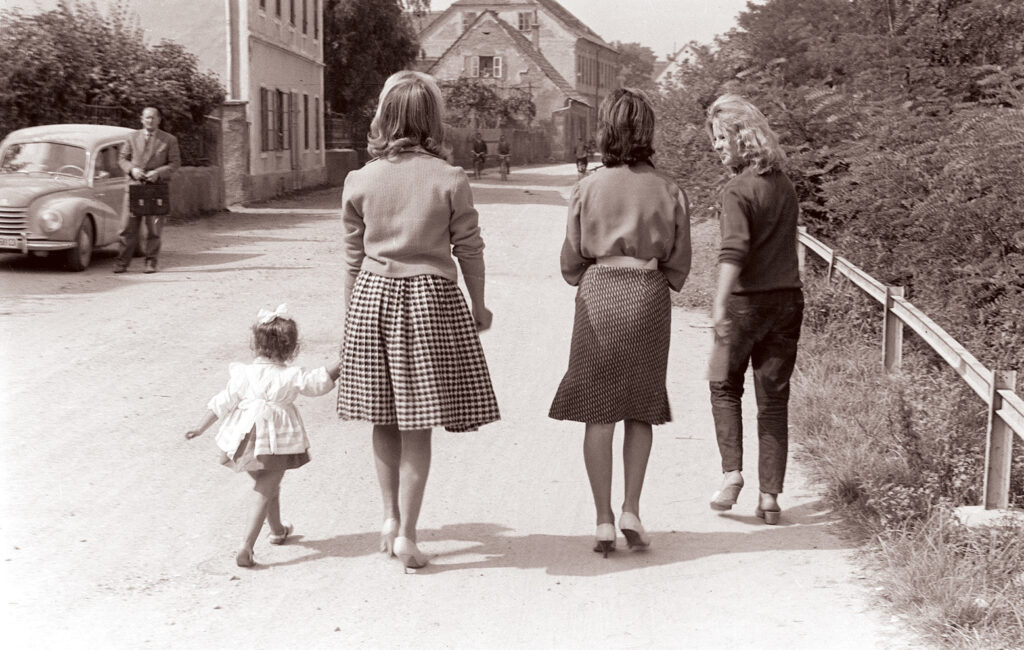
At the end of the 1960s the hemline went the other way. The hippie movement brought in long, loose maxi skirts and dresses, often in cotton, with prints, tiers and an empire waist, and by the early 70s the maxi was everyday clothing rather than a costume.
The midi was a different story. In 1970 the trade paper Women’s Wear Daily declared it “the year of the midi”, and designers dropped their hemlines to mid-calf, inspired by Victorian and 1930s clothes. Many women refused: polls at the time showed most of them were keeping their minis. In the end shops sold all three lengths, and they have lived side by side ever since.
The types, and how to wear each one
Every skirt belongs to a style, and often to a subculture. This is how I would wear each type now, and where the look comes from.
The mini: mod, Y2K and rock
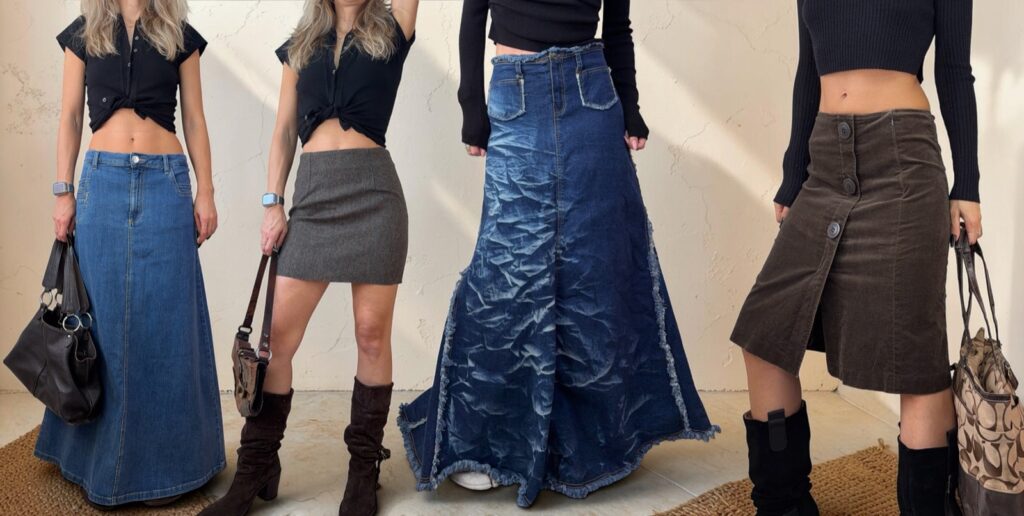
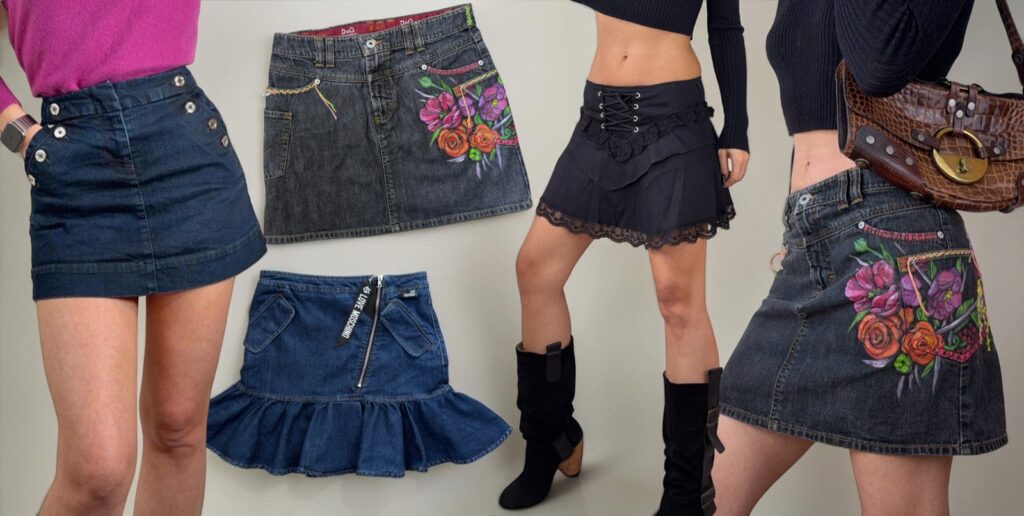
A mini ends well above the knee; on me (I’m 5 ft 6 in) that is anything from about 10 to 18 inches long, and under 12 inches it is a micro. Wear it the 60s mod way with a polo neck and knee-high boots, the Y2K way with a baby tee and a low-rise fit, or the rock way, short and dark with a leather biker and boots. Our guide to aviator and biker leather jackets covers the jacket half of the outfit.
The black midi: minimalist and office
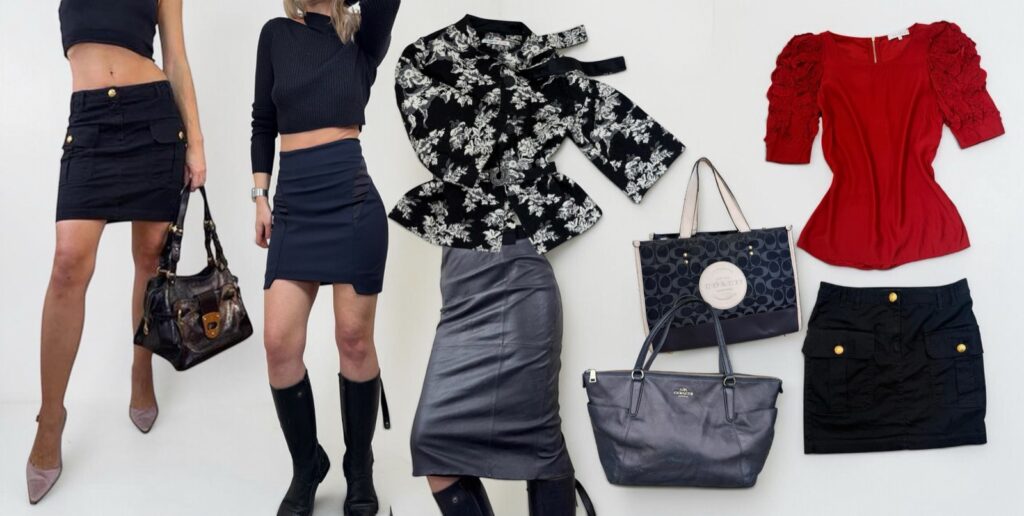
A plain black knee-length or midi skirt, straight or with a side slit, is the most useful skirt you can own. It is the 90s minimalist uniform: a fitted knit or a crisp shirt, a long coat, loafers or ankle boots. It works for the office on Monday and for dinner with heels.
The maxi: boho, 70s and fairycore
A maxi ends at the ankle, usually 33 inches or more, and a midi between the knee and mid-calf, usually 22 to 28. The maxi is the 70s hippie skirt: tiered, printed, worn with a fitted knit or a cropped jacket so the waist still shows, and flat boots or sandals. In soft prints, butterflies and florals, it is today’s fairycore.
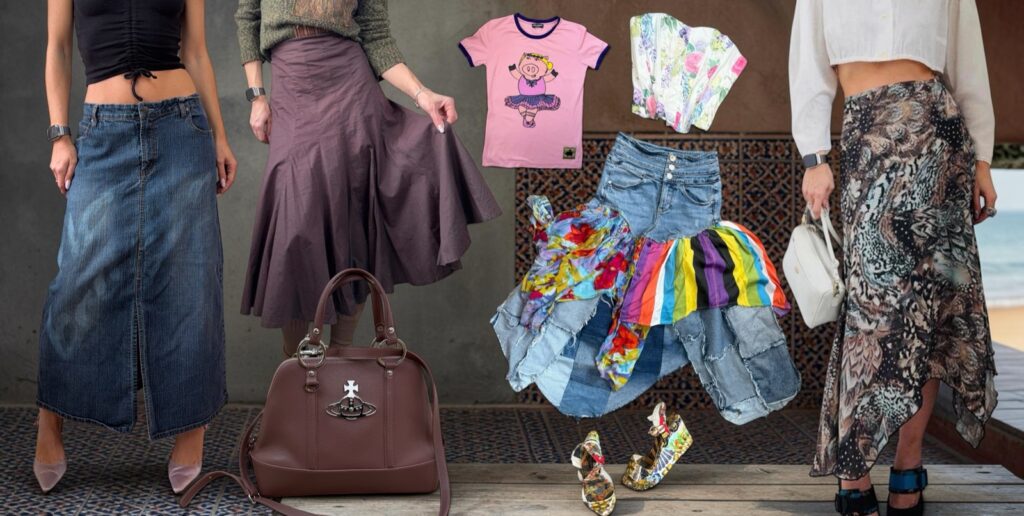
Tartan, wool and tweed: preppy, punk and winter
Wool skirts are the ones to wear from autumn to spring. A pleated tartan mini with a cardigan and loafers is preppy; the same skirt with a leather jacket, fishnets and boots is punk. That second look goes back to the late 1970s, when Vivienne Westwood and Malcolm McLaren, at their shop Seditionaries, put kilts over black bondage trousers. Longer wool, tweed and chevron midis are the warm version: thick tights, a chunky jumper and knee-high boots.
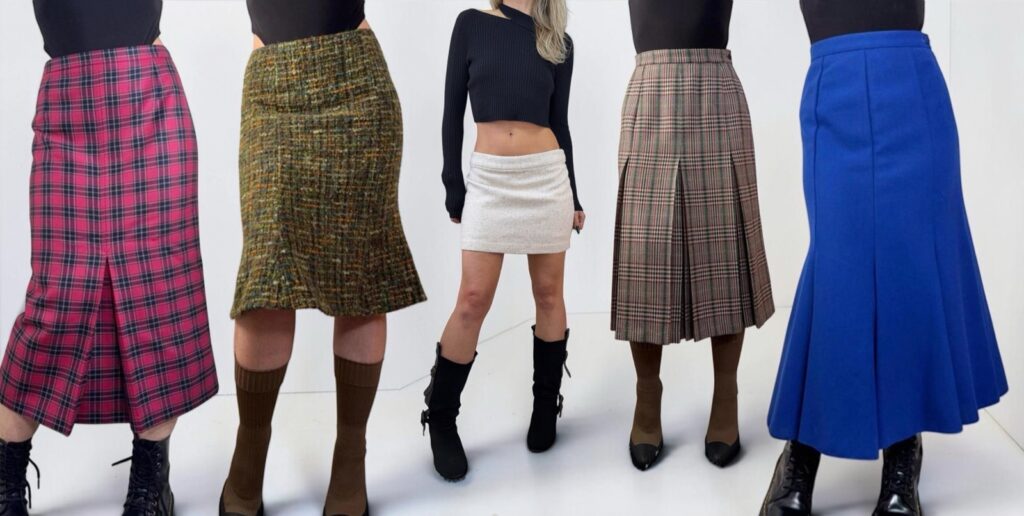
Pleated, A-line and flared: preppy, 50s and 60s
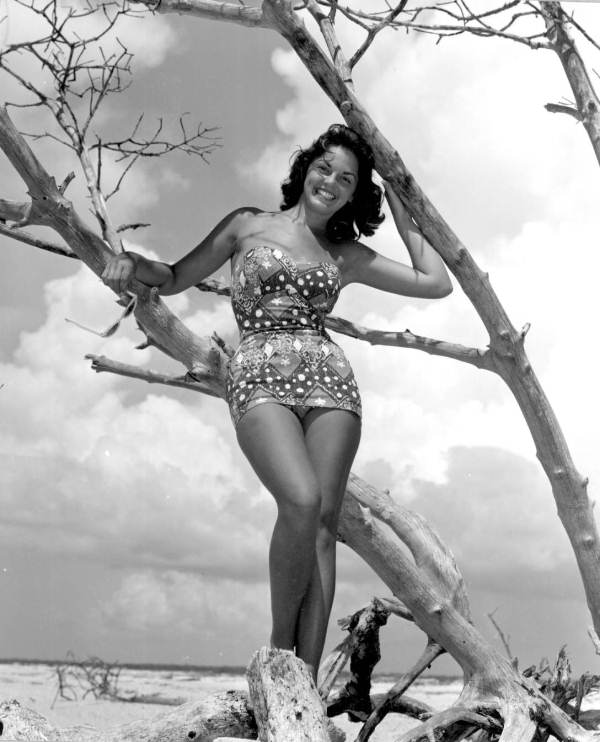
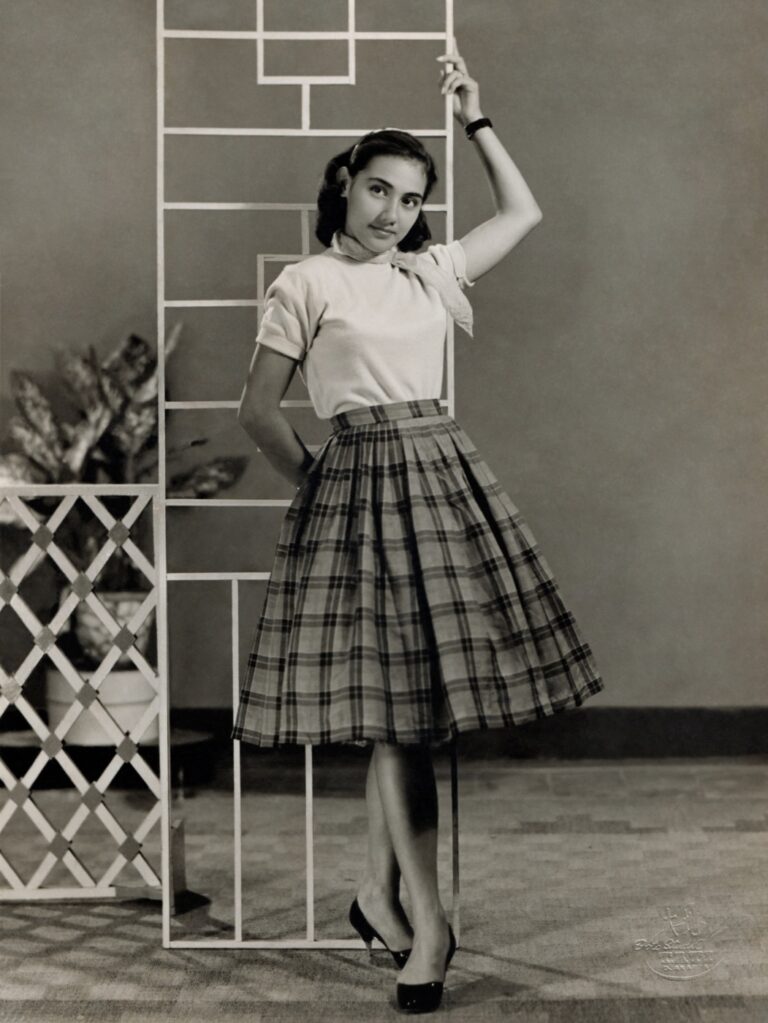
Narrow at the waist, wider at the hem. A-line is a gentle triangle, a flared or circle skirt swings out much further, like the full skirts of the 1950s that rockabilly still loves. Pleats make a skirt move and decide how it fits over the hips. Keep the top simple and fitted, tucked in, so the shape of the skirt shows.
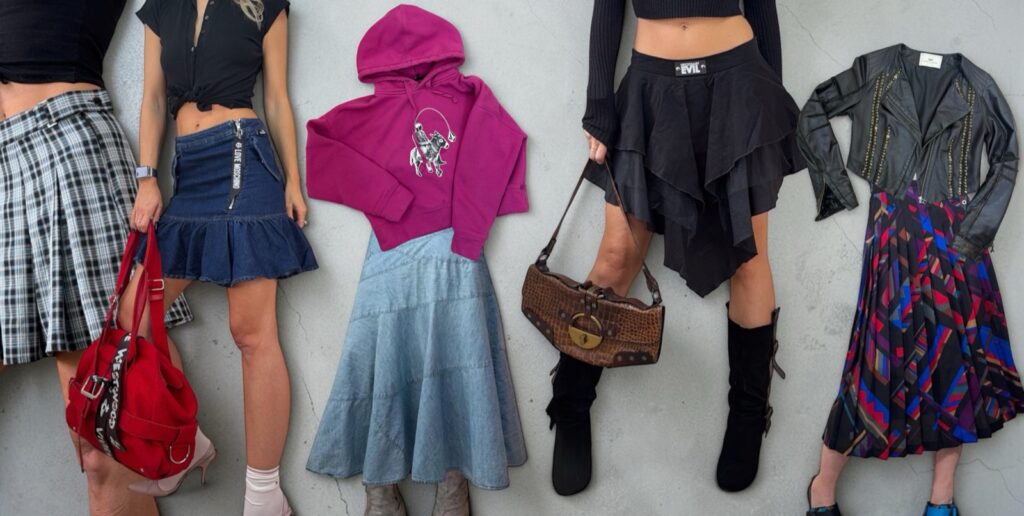
Floral, lace and ruffles: romantic, cottagecore and goth
In 1979 and 1980 the Blitz Kids, the crowd at the Blitz club in Covent Garden, started the New Romantic movement, with ruffles, sashes and costume borrowed from the English Romantic era. The romantic skirt keeps that spirit: lace, ruffled hems, bows and long floral midis. Wear a floral midi with a knit and boots for cottagecore, or lean darker, black lace over red satin, and the same skirt turns goth.
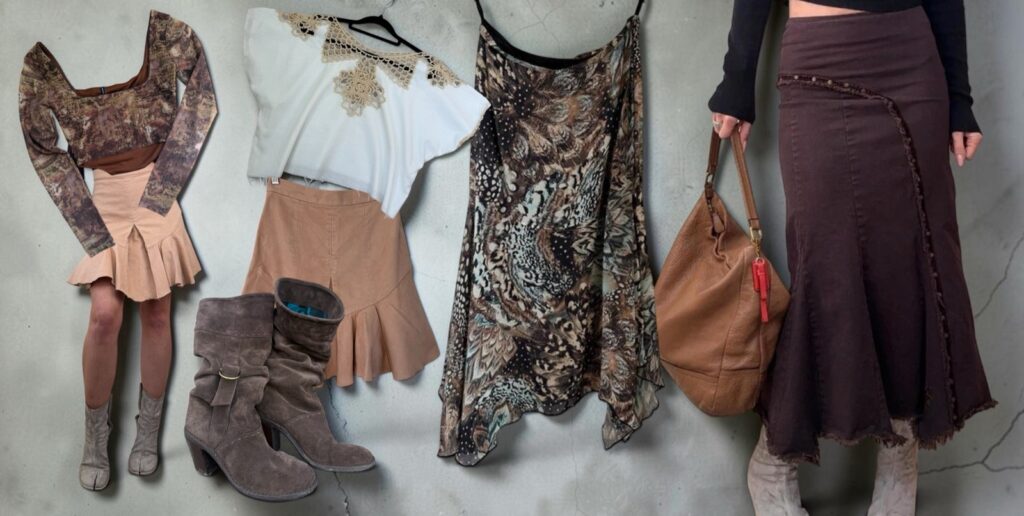
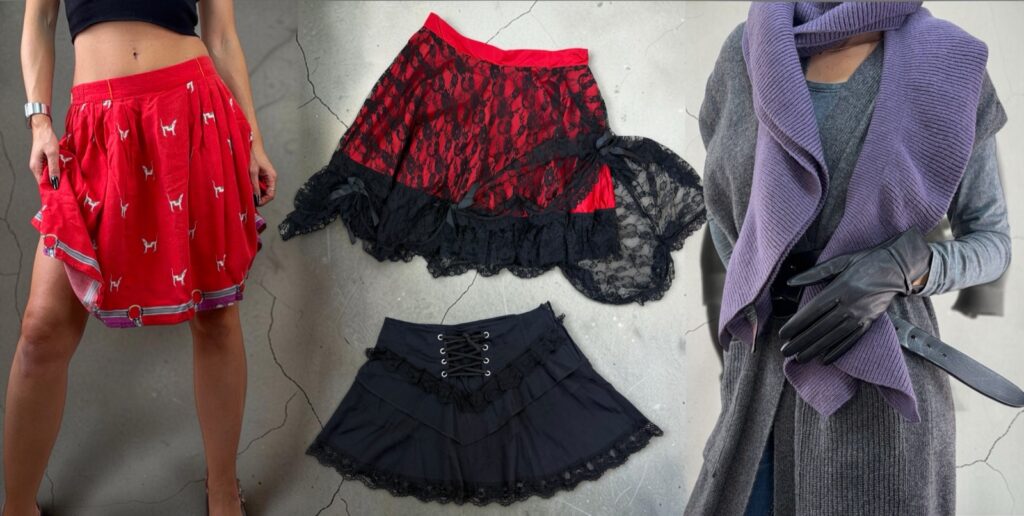
Satin, silk and slip skirts: 90s and boho
The 90s slip skirt is long, bias-cut and simple, worn with a T-shirt, a jumper or a leather jacket. A short silk skirt with a print is the boho version, with sandals in summer and boots in winter.
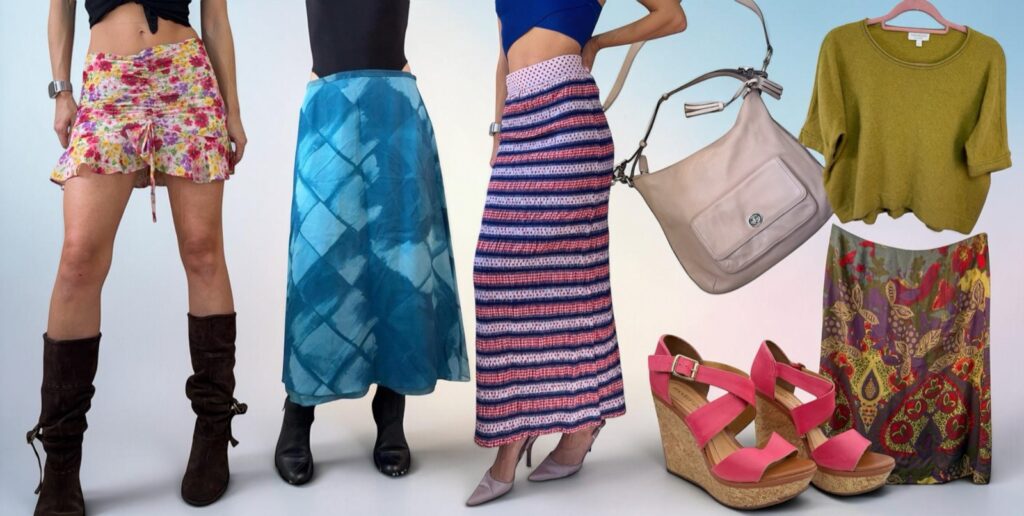
Denim: 70s, grunge and Y2K
In the 1970s denim skirts were often DIY, old jeans cut open and sewn into a skirt. The 90s made them grunge, a short denim or plaid mini with a cardigan and chunky boots; Clueless (1995) did the preppy plaid version. The 2000s cut them low on the hip, with embroidery, rhinestones and ruffled hems, and a long denim maxi with a slit is the Y2K skirt that has come back the strongest. If you love that era, our guide to Y2K fashion has the rest of the look.
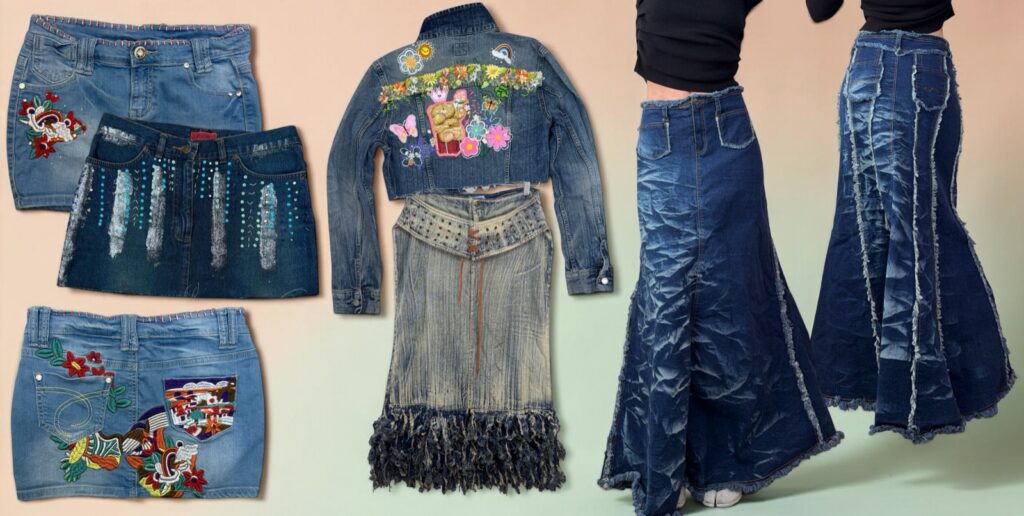
Leather, suede and cargo: rock and utility
A real leather skirt, cut close, is rock or witchy goth with black tights and boots; suede is softer and often pleated or fringed, more 70s. Cargo skirts, with utility pockets and zips, are a 2000s favourite that is back: wear them with a fitted top and trainers. For evenings, our night out outfits guide has more.
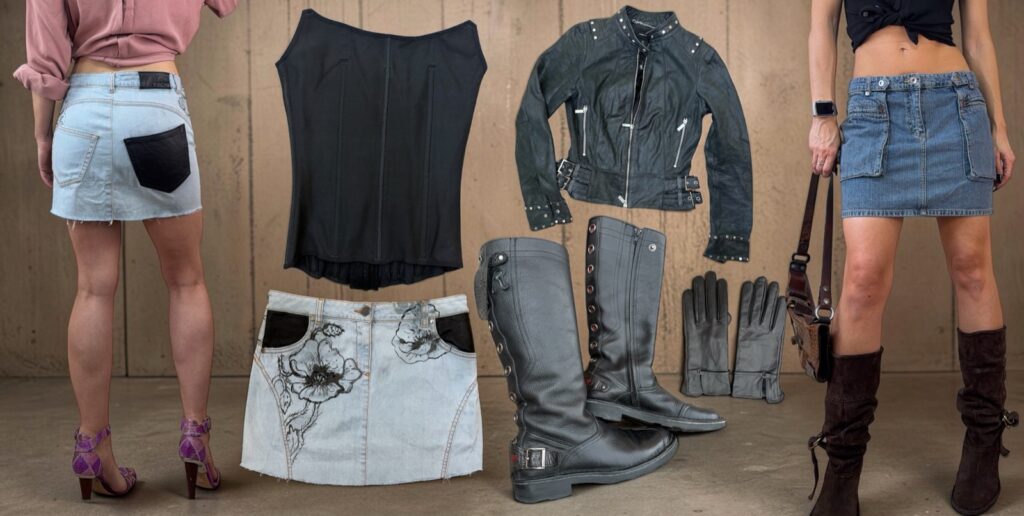
The length is the most useful number in a listing. A midi on someone who is 5 ft 2 in can look like a maxi; a mini on someone who is 5 ft 10 in can look like a micro. Compare the length with a skirt you already own.
How a vintage skirt fits
On a skirt the waist decides almost everything, and the label is often the least reliable number. A few examples from skirts I have measured:
- A Braemar pleated wool mini labelled size 6 measures 29 inches round the waist and fits a UK 10. Old British sizes ran smaller than today’s.
- Low-rise skirts from the 2000s are cut for the hip, not the natural waist. A Kiss Miss denim micro marked W29 measures 29 inches round, but it is low-rise and sits on the hip, so it fits like a UK 8.
- European labels use their own numbers: an Acne Studios 36 and an Isabel Marant FR 36 both fit a UK 8. Our Italian, French and German size guide has the full conversion.
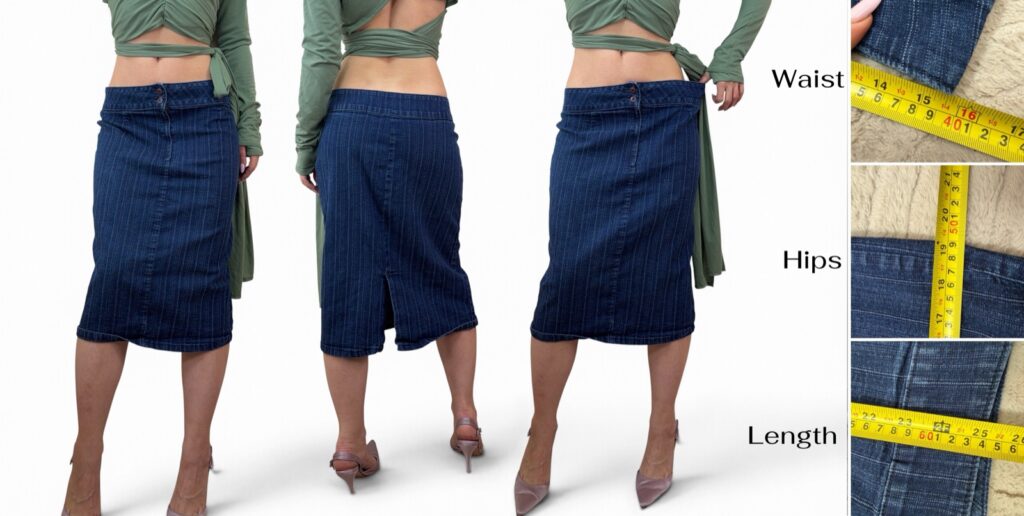
To check a skirt, lay one that fits you well flat, measure straight across the waistband and double it. Then measure the length from the top of the waistband to the hem. Compare both with the listing, and remember where the skirt sits: high-waisted skirts need your natural waist measurement, low-rise ones your hip measurement. Our size guide shows how we measure, and Will it fit? compares a skirt with your own numbers.
Looking after vintage skirts
- Pleats: hang pleated skirts by the waistband with clips, and press the pleats back with a cloth between the iron and the fabric. Wool pleats come back with steam.
- Satin and lace: hand wash cold or dry clean, never wring, and dry flat.
- Denim: wash inside out and cold to keep the colour, and hang embroidered or embellished denim to dry.
- Leather and suede: no washing machine; wipe or brush, and take stains to a specialist.
Our guide to washing vintage clothes and reading care labels explains the symbols on the label.
What is on my rail now
- Phaze red satin and black lace midi skirt with bows, gothic Lolita, UK 14
- Wallis floral pleated midi skirt in viscose, UK 8
- No Boundaries Y2K denim maxi skirt with a front slit, UK 16 to 18
- Isabel Marant blush pleated mini skirt, FR 36 / UK 8
- Braemar red dog-print pleated wool mini, UK 10
- Acne Studios navy panelled mini skirt, SS2011, UK 8
- Dolce & Gabbana denim mini, hand-painted by me with flowers and a bird, UK 8
- Love Moschino dark denim mini with a ruffled hem, UK 8 to 10
- Love Moschino black cargo mini with gold logo buttons, UK 8 to 10
- Zoe beaded and painted denim mini with a raw hem, UK 8 to 10
- Kiss Miss embroidered low-rise denim micro skirt, UK 8
- Esprit low-rise denim cargo mini, UK 10
See all our skirts, or go straight to mini, midi and maxi skirts. One-off pieces I have painted or reworked myself are in the Atelier.
Questions people ask
What is the difference between a mini, midi and maxi skirt?
It is the length. A mini ends well above the knee, a midi between the knee and mid-calf, and a maxi at the ankle. On a woman of average height that is roughly up to 18 inches, 22 to 28 inches, and 33 inches or more.
Who invented the miniskirt?
Mary Quant made it famous from her shop on the King’s Road in London in the mid-1960s and named it after the Mini car. The French designer André Courrèges showed short dresses in 1964, so both are credited.
What skirts go with a punk or rock look?
A tartan or plaid mini for punk, a black leather or denim mini for rock. Both work with a biker jacket, tights or fishnets and boots.
Do vintage skirts run small?
Older British sizes often do: a vintage size 6 or 8 can fit a modern UK 10. Go by the waist measurement, not the label, and check whether the skirt is high-waisted or low-rise.
How do I keep pleats in a vintage skirt?
Hang it by the waistband with clips, wash it gently or dry clean it, and press the pleats back with steam and a cloth between the iron and the fabric.