Aviator and Biker Leather Jackets: Where They Come From, Real Leather vs Faux, and How Vintage Ones Fit

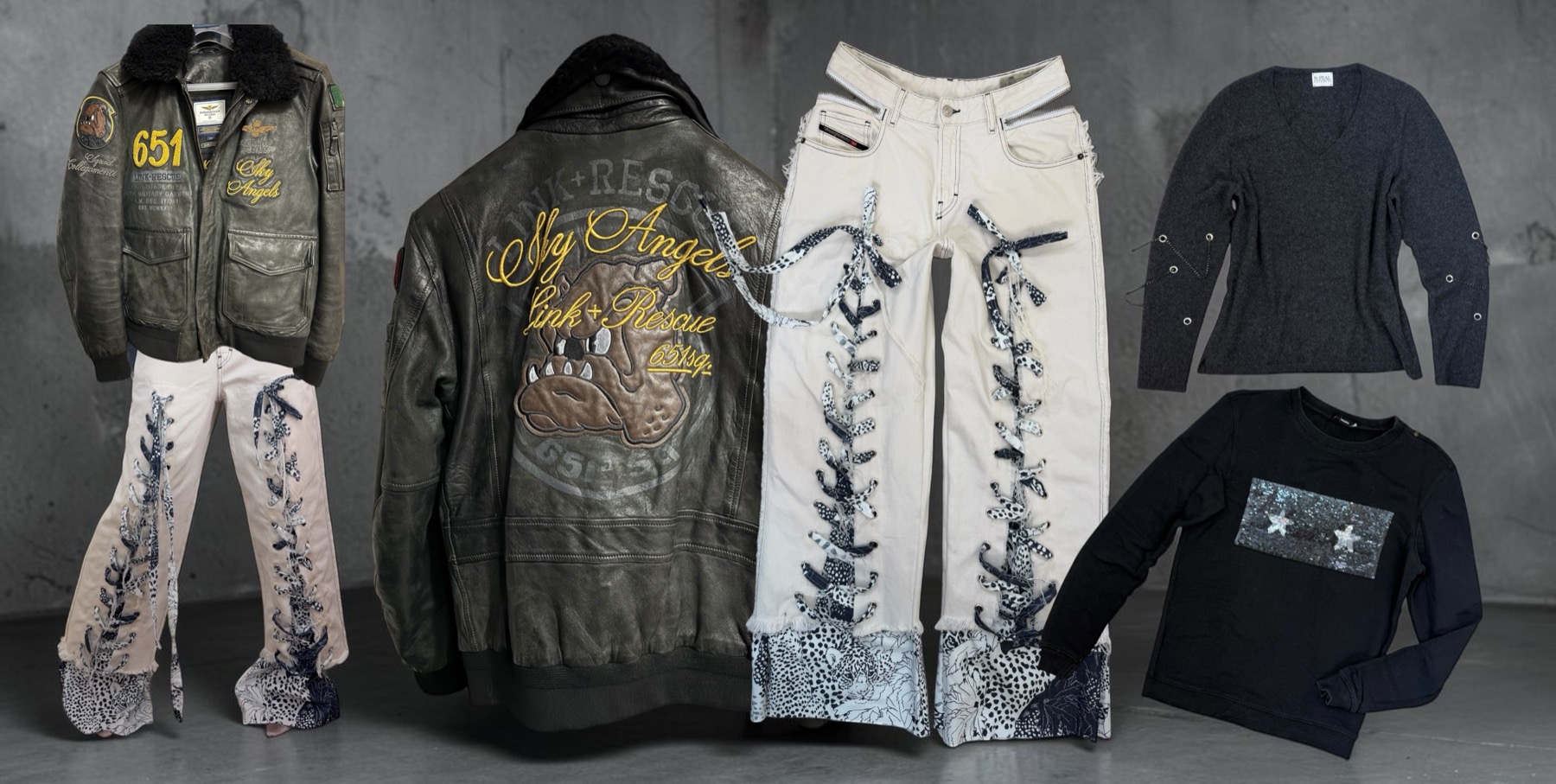
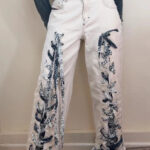
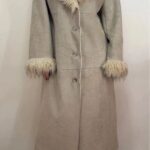
In the photo above, from left: an Aeronautica Militare leather and shearling aviator (private collection), custom Diesel lace-up jeans, a custom N.Peal cashmere jumper with chain and a Diesel reversible sequin sweatshirt, all three available.
UK delivery from this site · prices in GBP · Outside the UK? Find our pieces on eBay and Vestiaire Collective, which ship internationally.
There are two leather jackets everyone means when they say “a leather jacket”. One is the biker: black, zipped across at an angle, with a belt and snap-down lapels. The other is the aviator: brown, heavy, with a big sheepskin collar you can turn up against the wind.
Both began as work clothes for men who rode or flew in the cold. Both were turned into fashion by films and musicians, and both keep coming back. I have had real leather, faux leather and real shearling through my hands this season, so this is what I look for and how they fit.
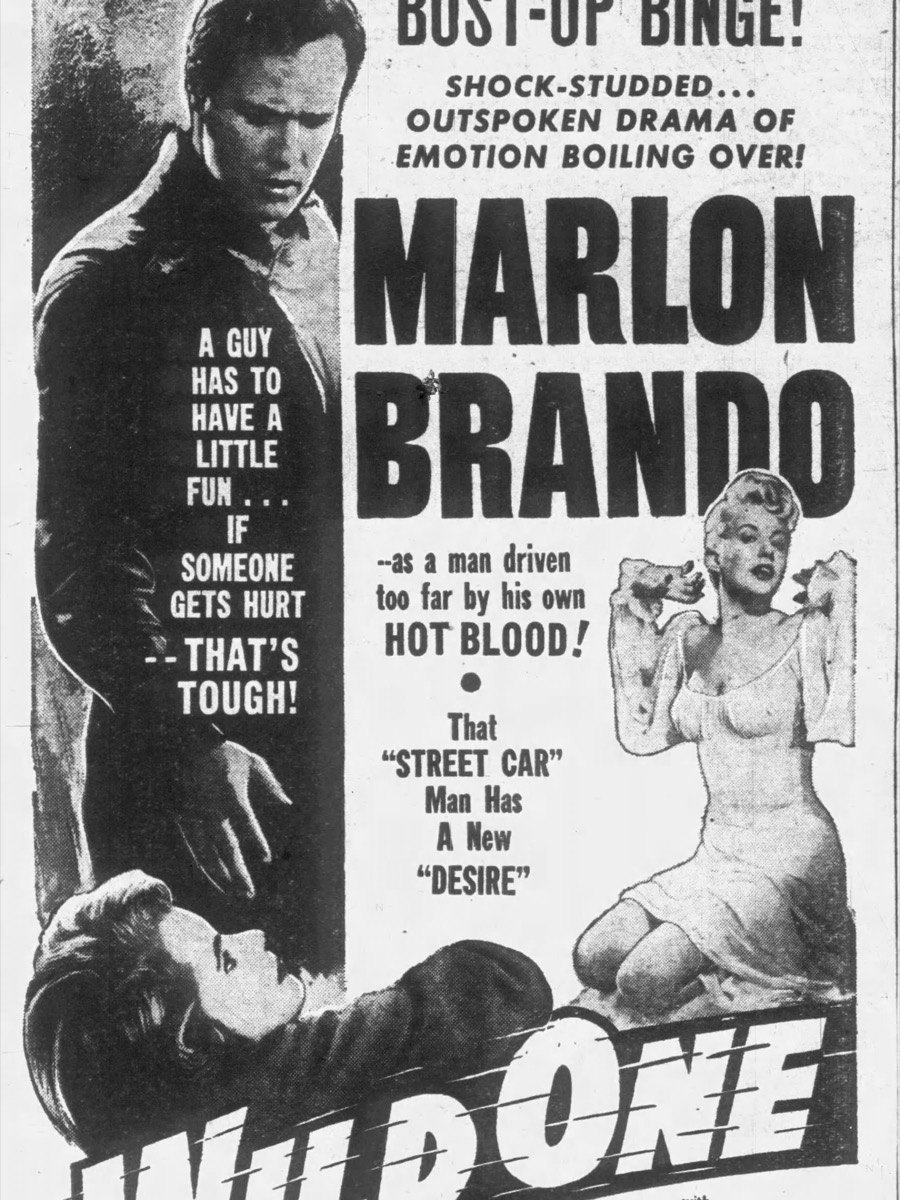
Short version: the biker jacket was designed in 1928 by Irving Schott in New York and made famous by Marlon Brando in The Wild One (1953). The aviator comes from the sheepskin flying jackets that pilots wore in open, unheated cockpits, like the Irvin jacket issued to the RAF in the 1930s. A fitted leather biker hardly gives in the width, so buy it for your chest and shoulders. A shearling aviator wears about a size smaller than its label, because the fleece takes up room inside.
Where the aviator jacket comes from
The first pilots flew in open cockpits, thousands of feet up, with nothing between them and the wind. Wool coats were not enough. They needed leather to block the wind, and fleece to keep the heat in.
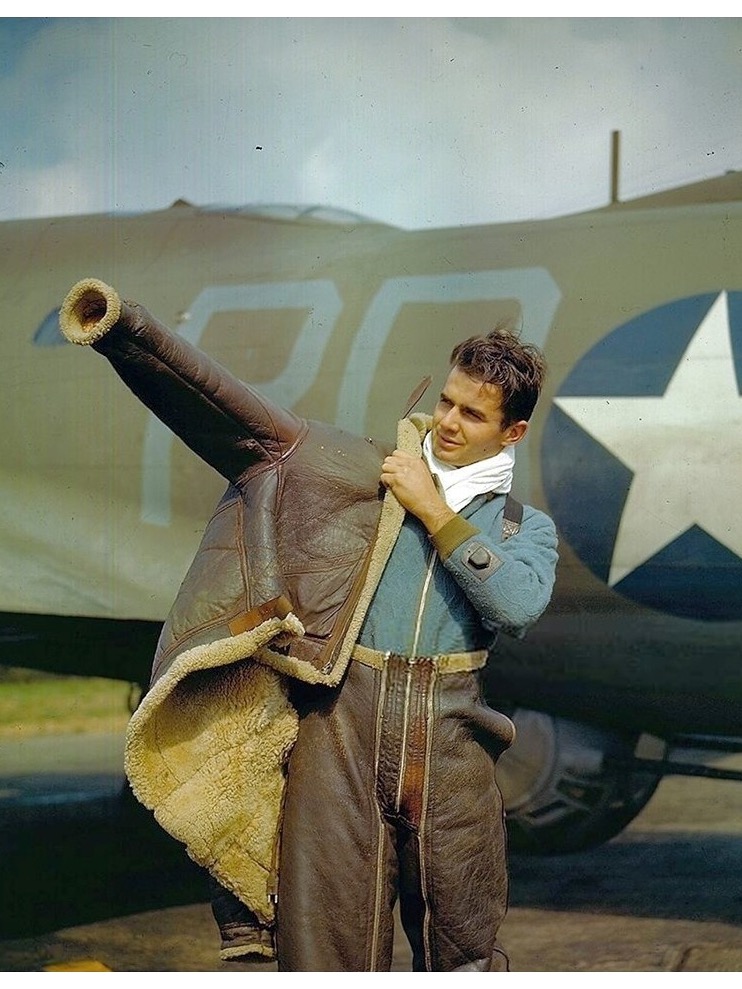
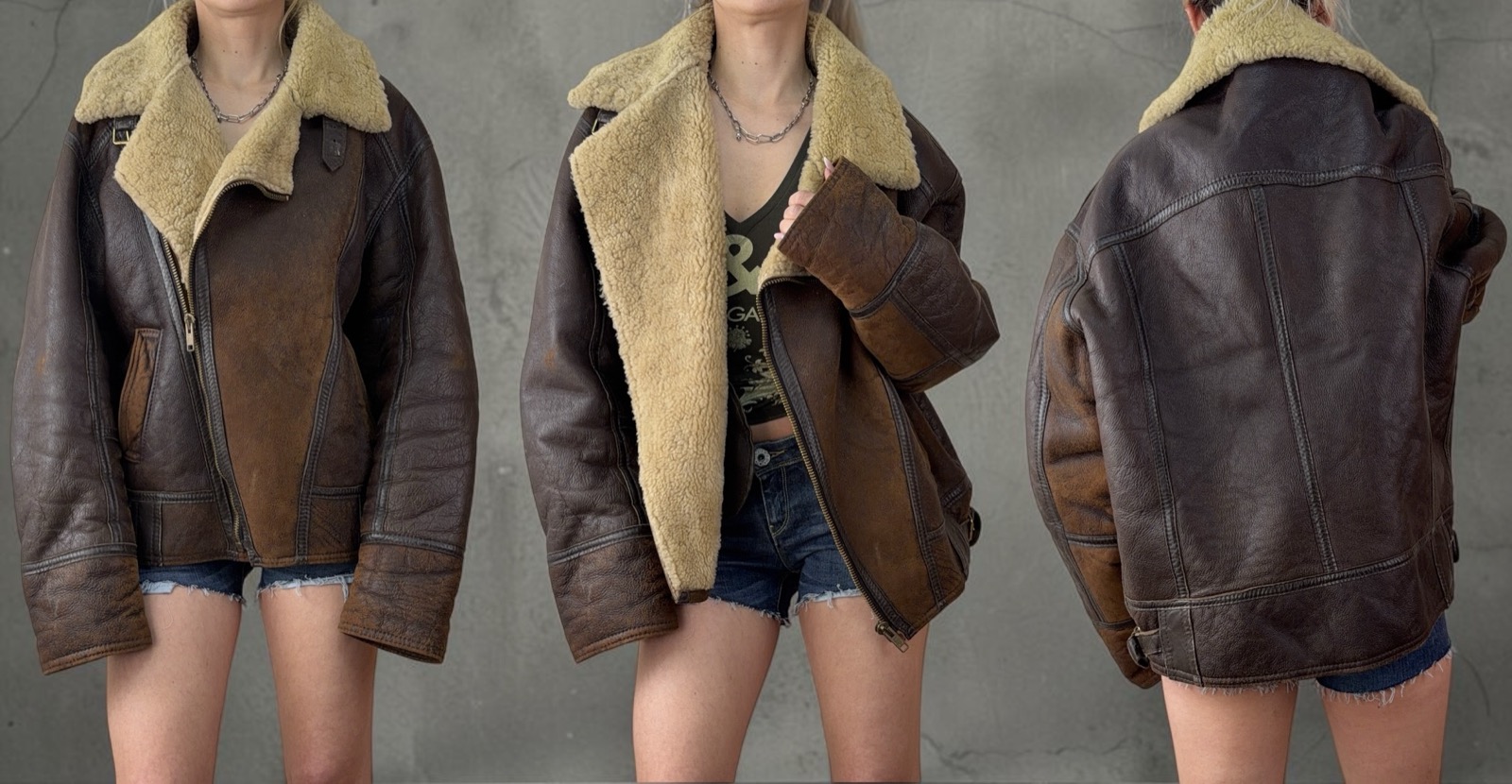
The answer was sheepskin worn wool side in. In the early 1930s Leslie Irvin, an American parachute maker who had once been a Hollywood stuntman, designed a sheepskin flying jacket for the Royal Air Force. It had a wide collar that could be turned up over the ears, zips at the cuffs so pilots could wear gauntlets, and a belt to stop draughts. RAF crews wore it through the Battle of Britain, and the “Irvin” is still the shape most people picture when they hear “aviator”.
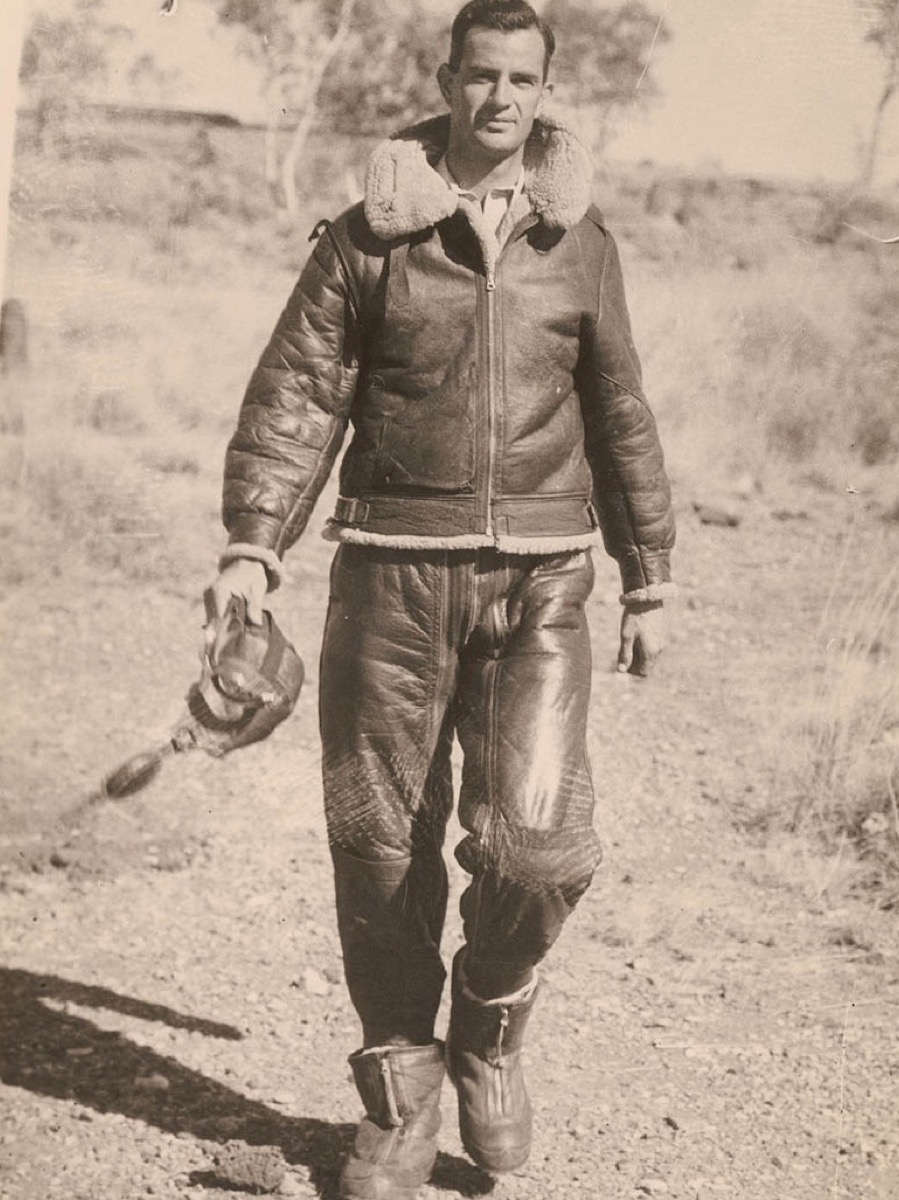
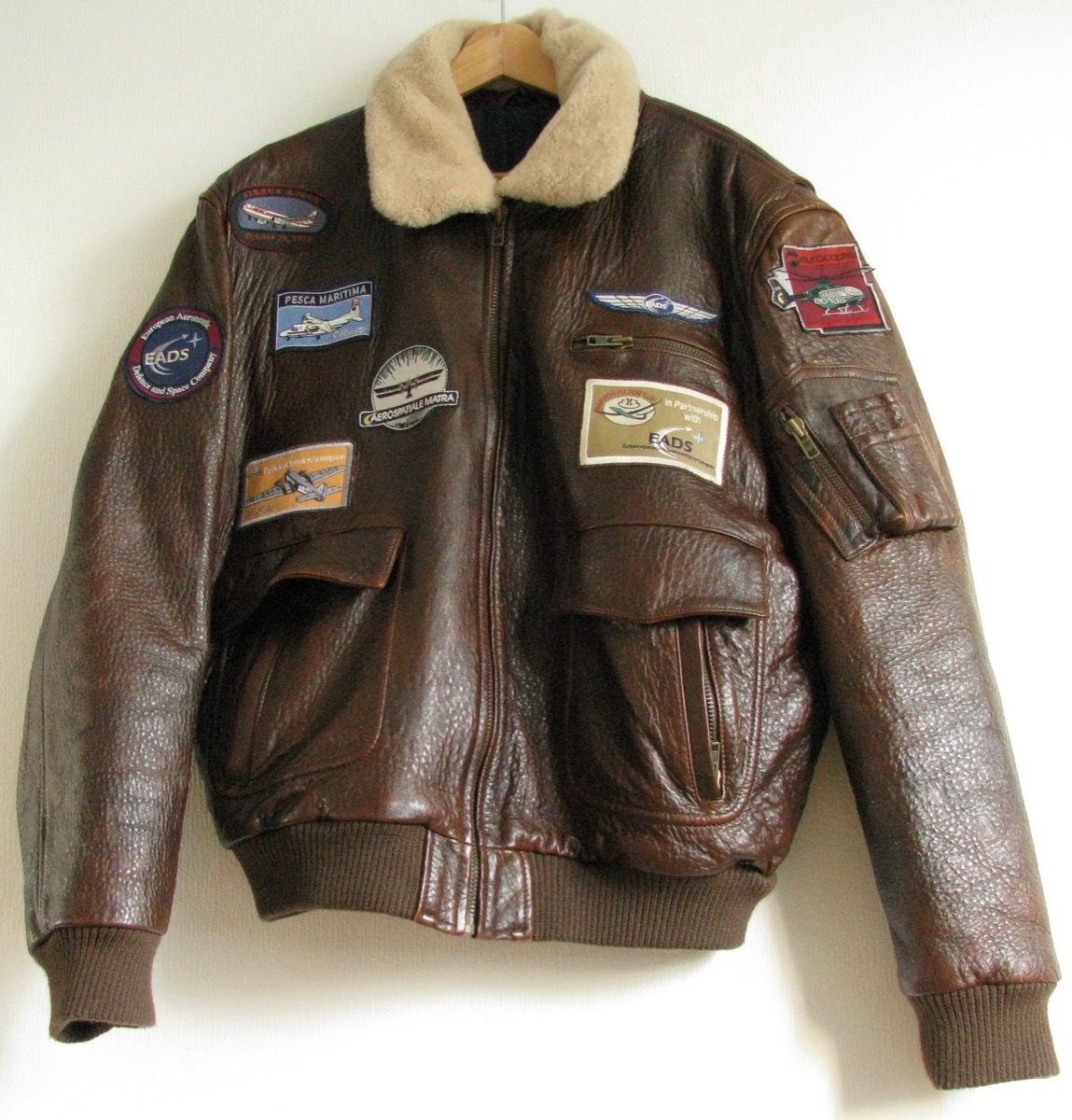
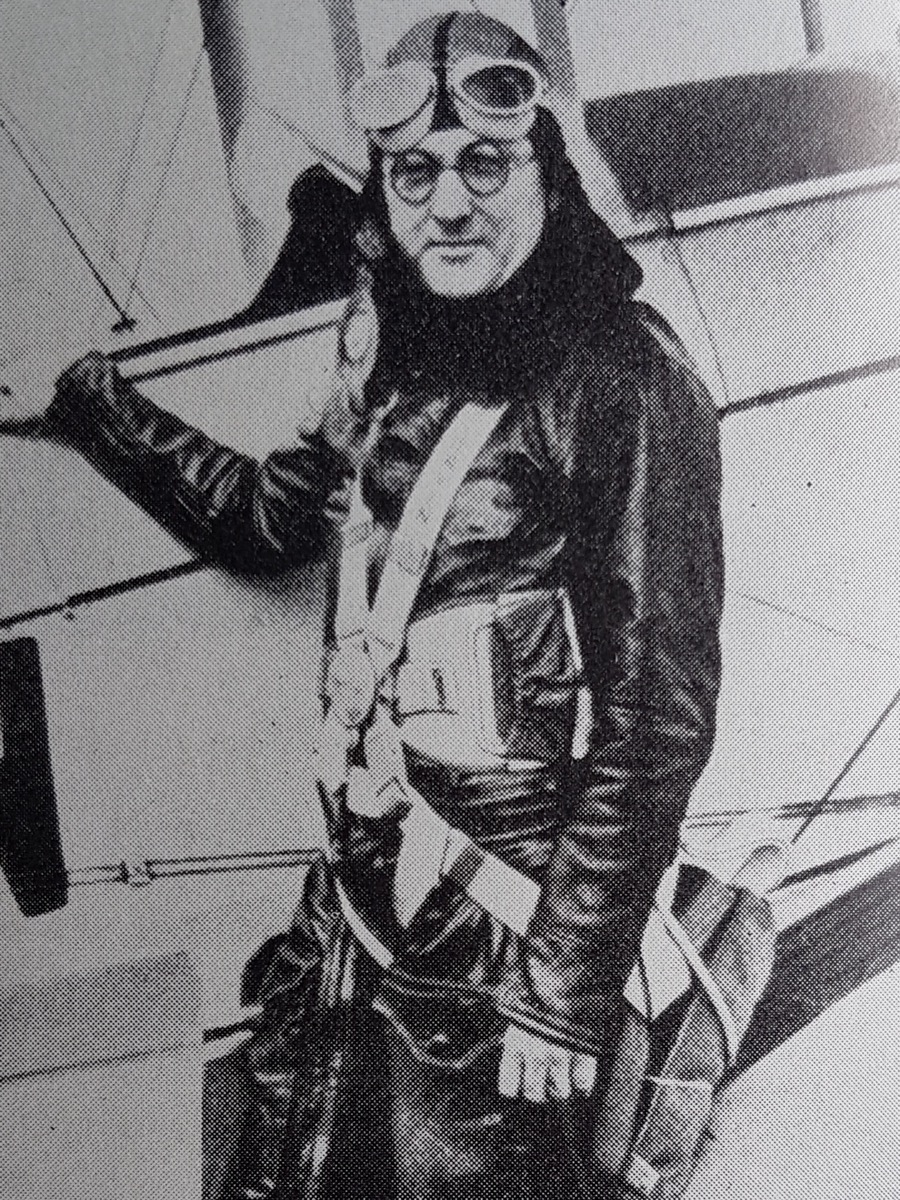
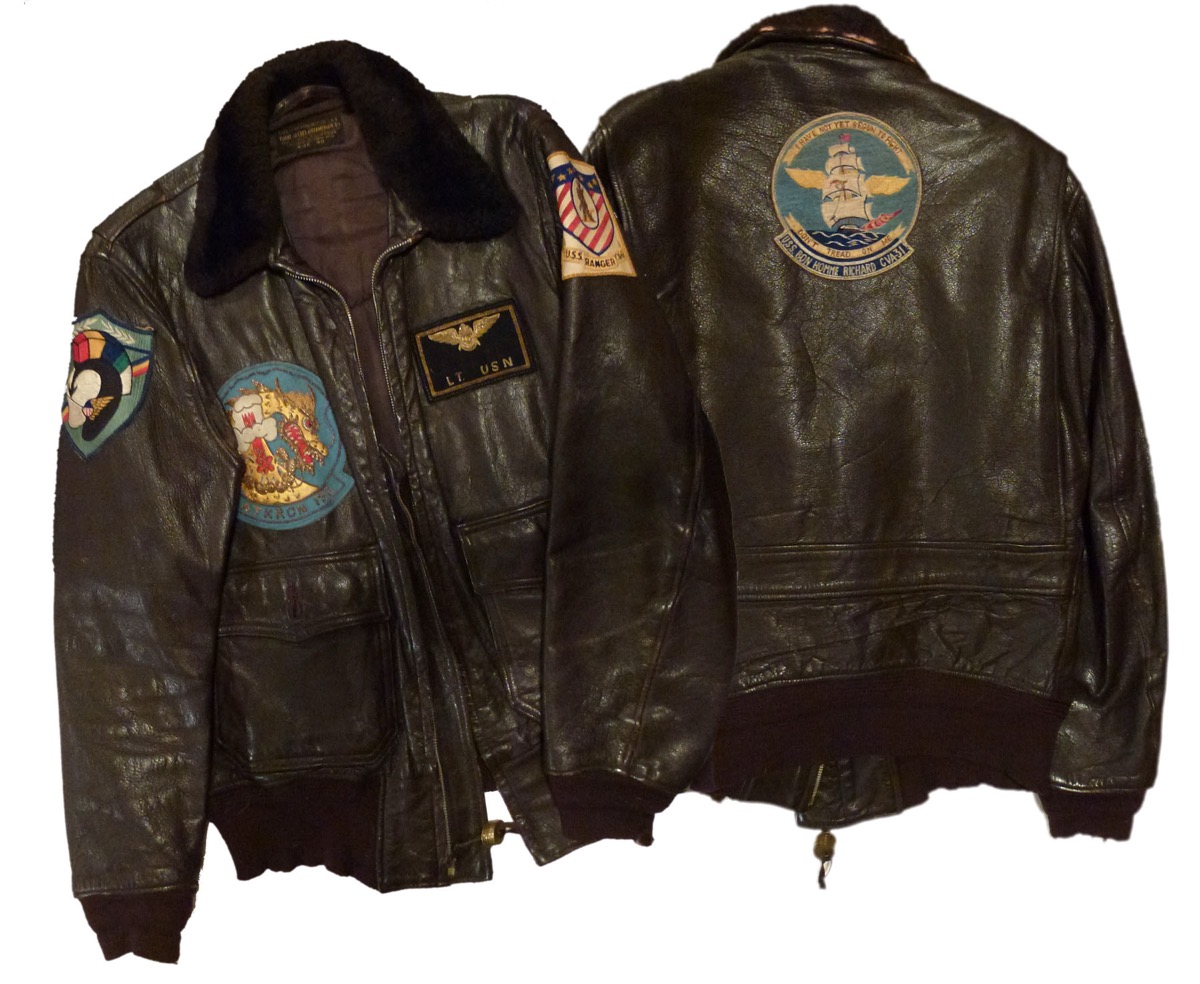
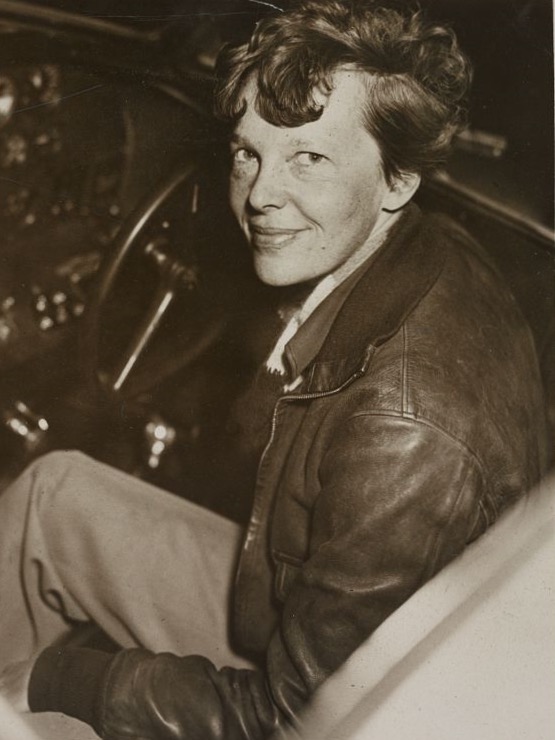
In America the Army Air Corps had its own versions: the A-2, a brown leather jacket with a shirt collar and knitted cuffs and hem, and the B-3, a heavy sheepskin bomber jacket for the coldest flights. Amelia Earhart wore leather flying jackets too. The story goes that she slept in a new one for nights so that it would look worn before anyone photographed her in it.
Where the biker jacket comes from
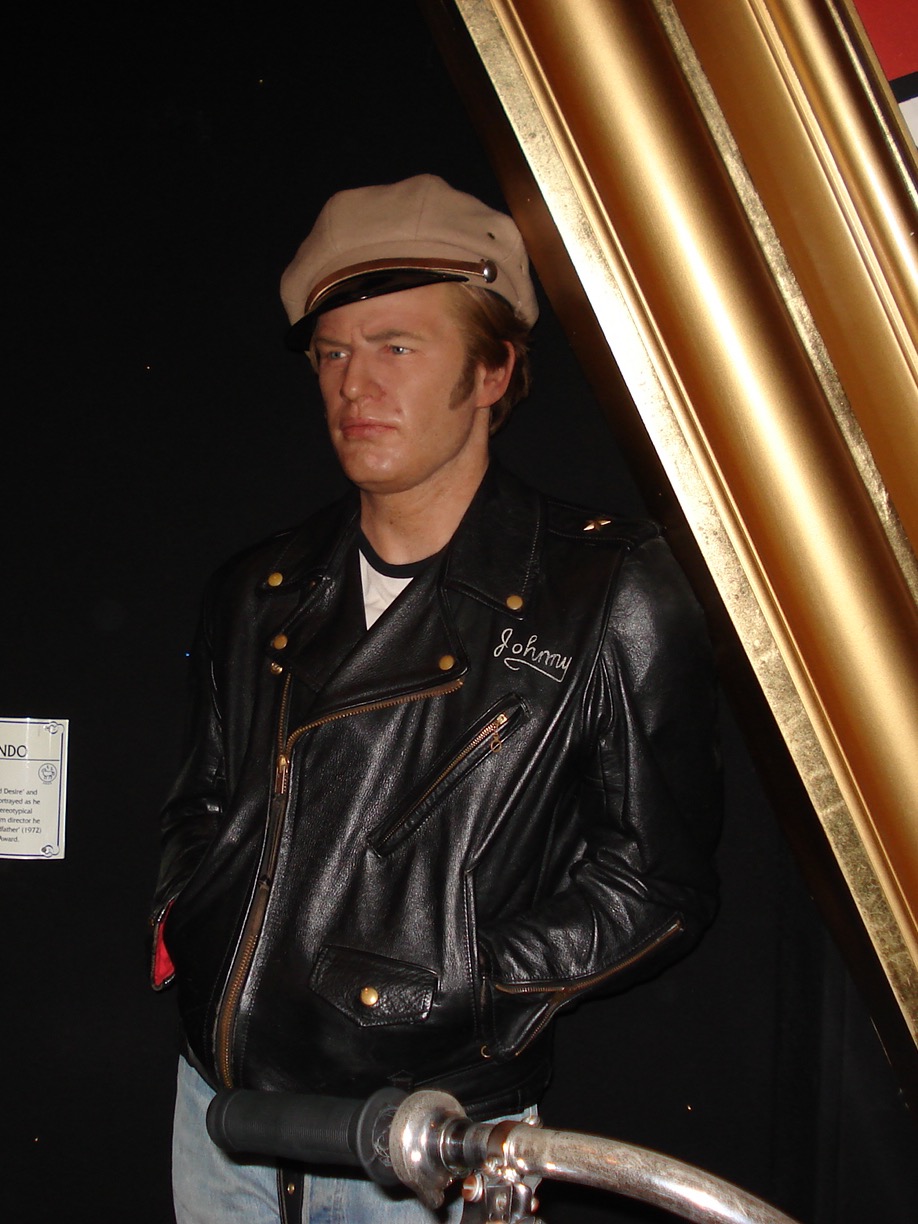
The biker jacket has a birthday and a maker. In 1928 Irving Schott, who ran a coat business in New York with his brother, cut a heavy black leather jacket for motorcyclists. He named it the Perfecto, after his favourite cigar, and it was sold for $5.50 through a Harley-Davidson distributor on Long Island.
Every detail had a job. The zip runs at an angle so the jacket can close over the chest without a bulky fold in the middle. The wide lapels snap down so they do not flap at speed. The belt pulls the hem tight against the wind, and zipped cuffs close around the wrists.
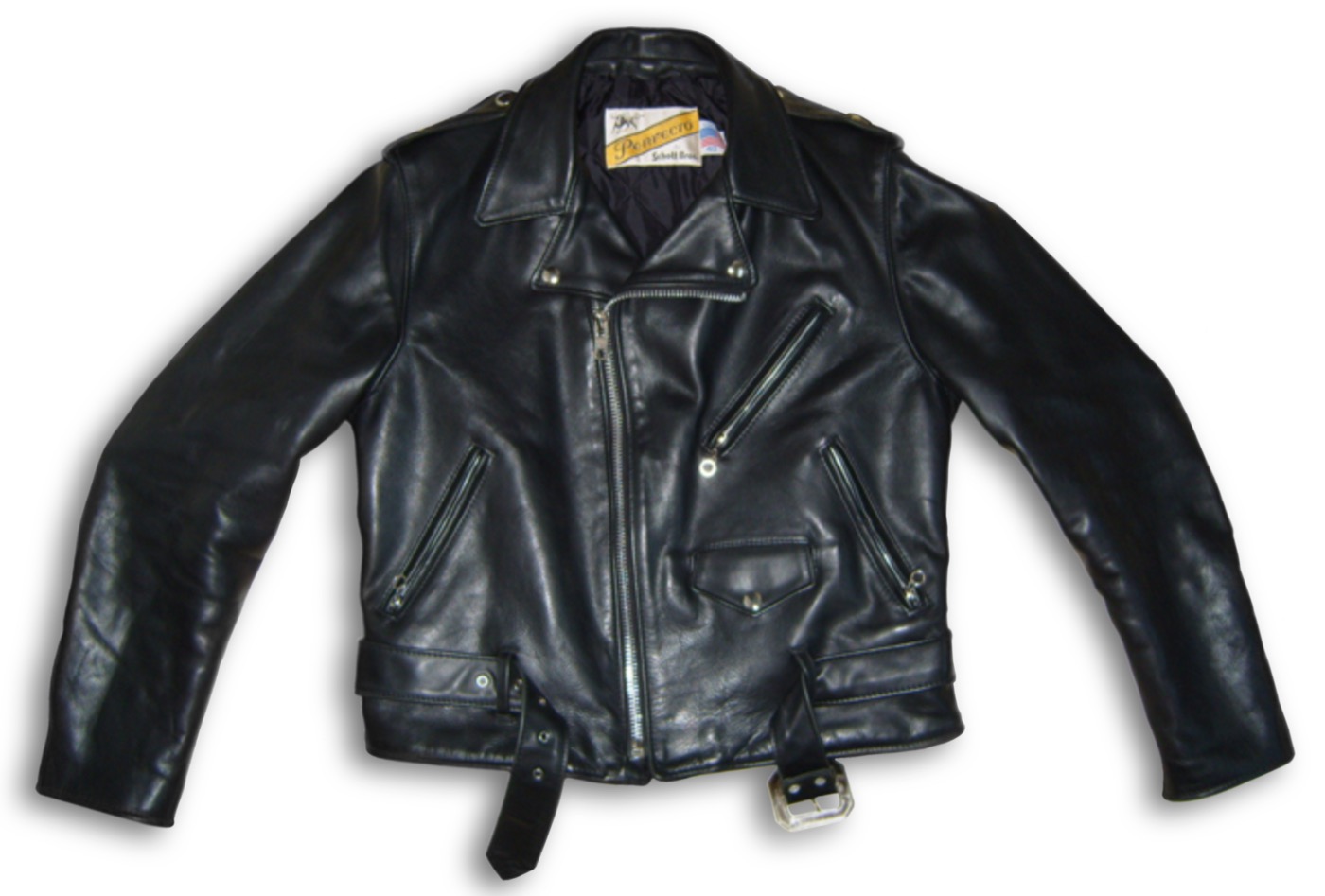
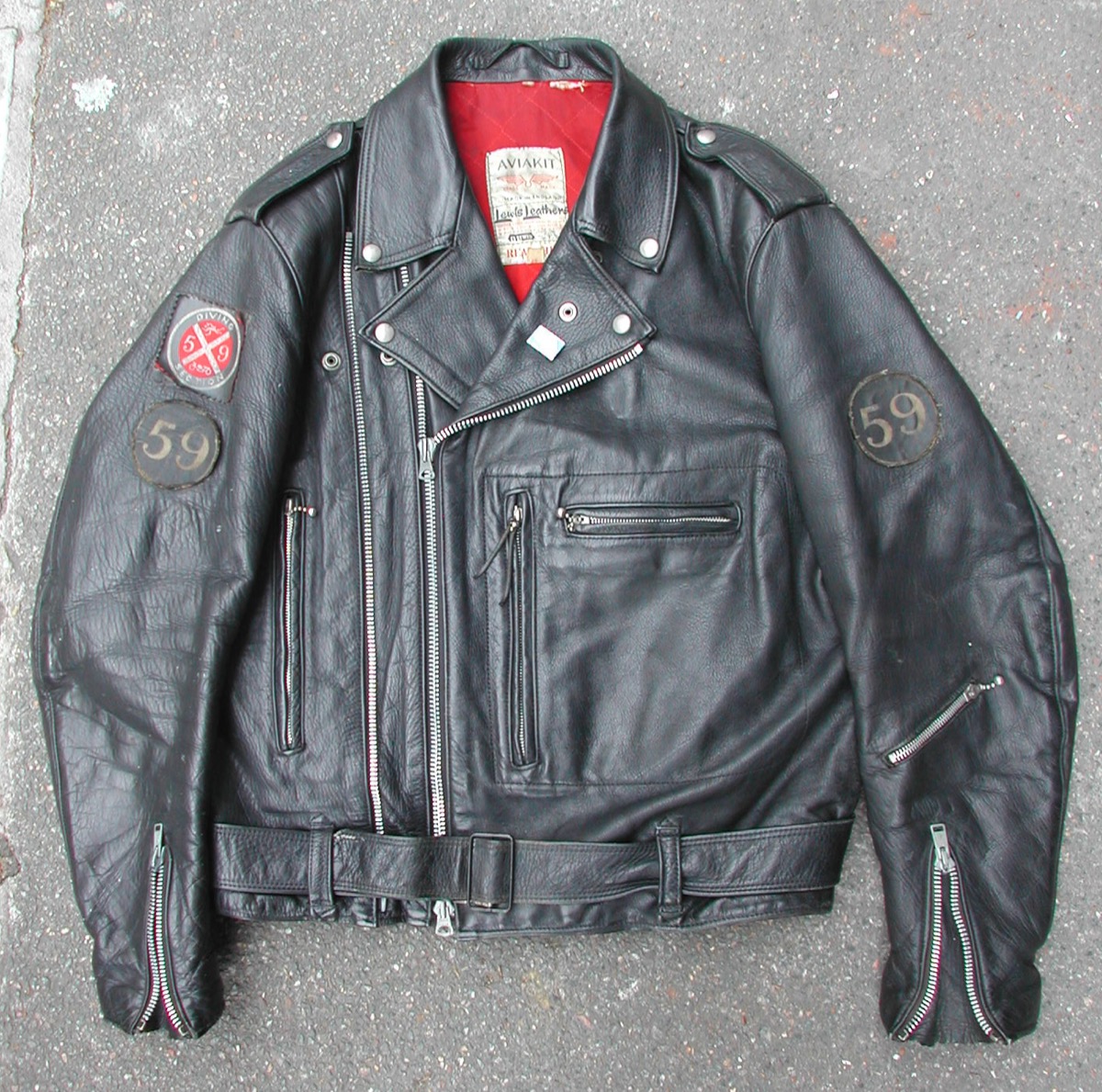
Nearly a hundred years later, that is still the jacket. Most of the bikers I find, from high street labels to designers, are built on the same plan.
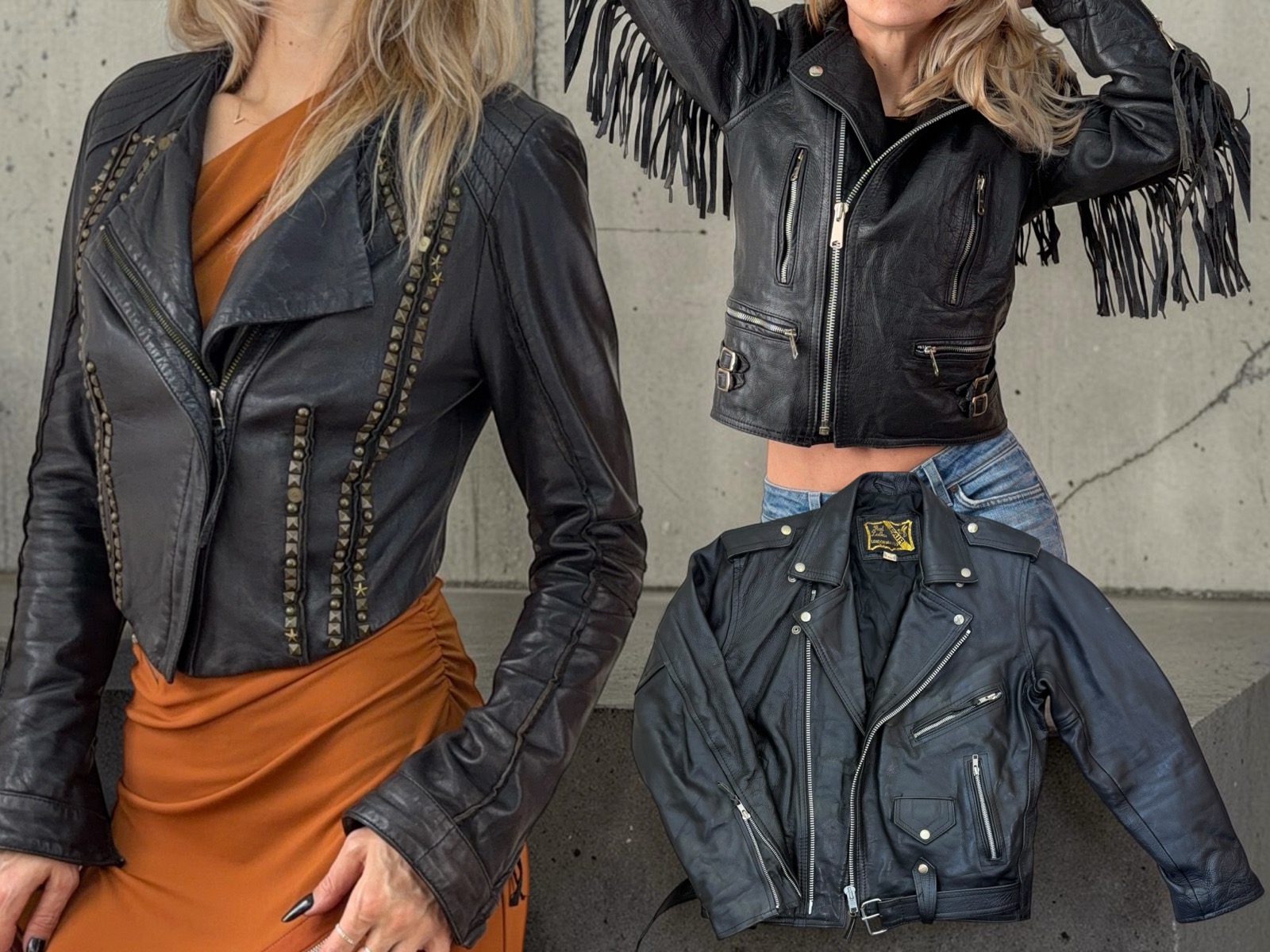
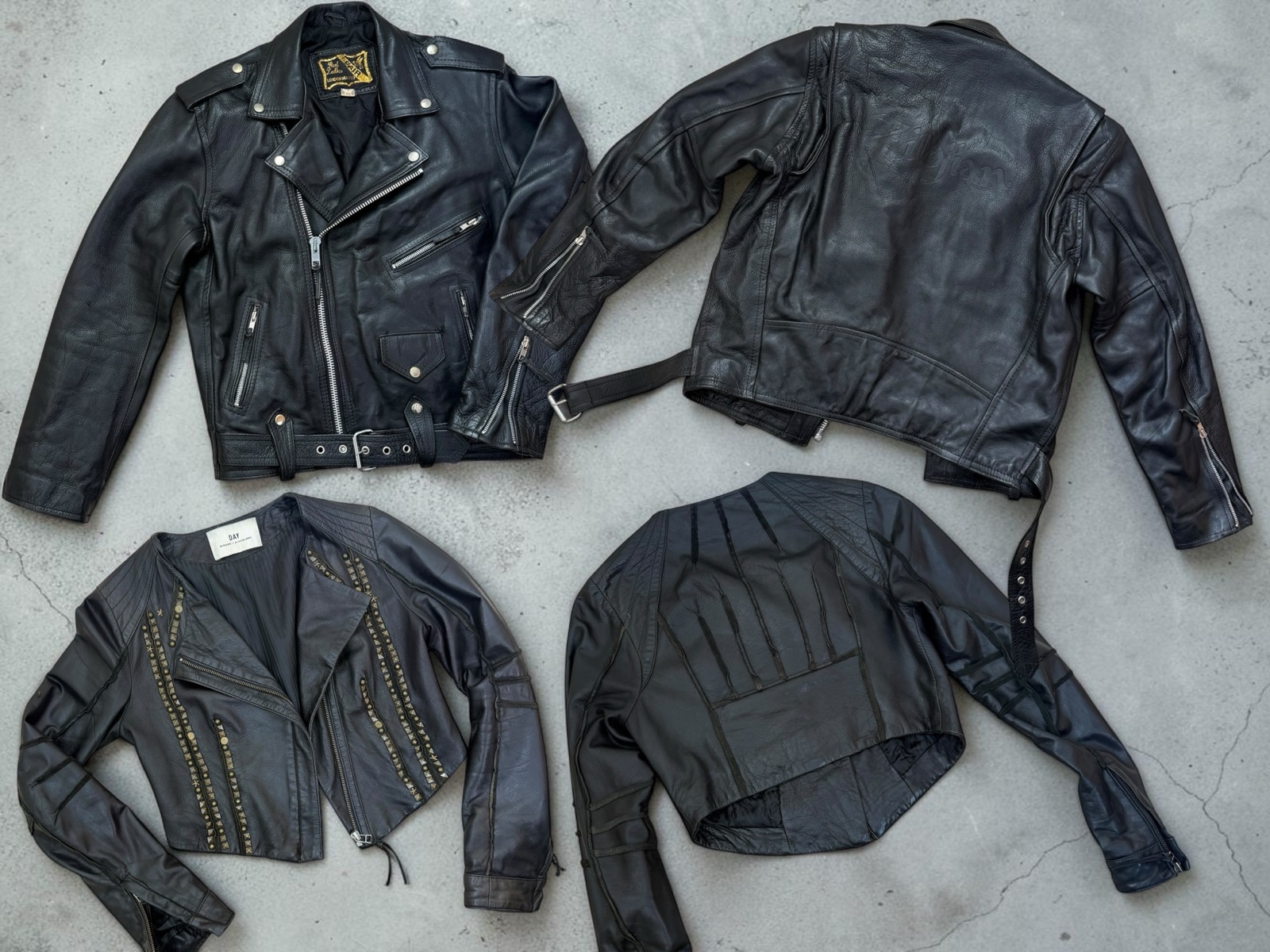
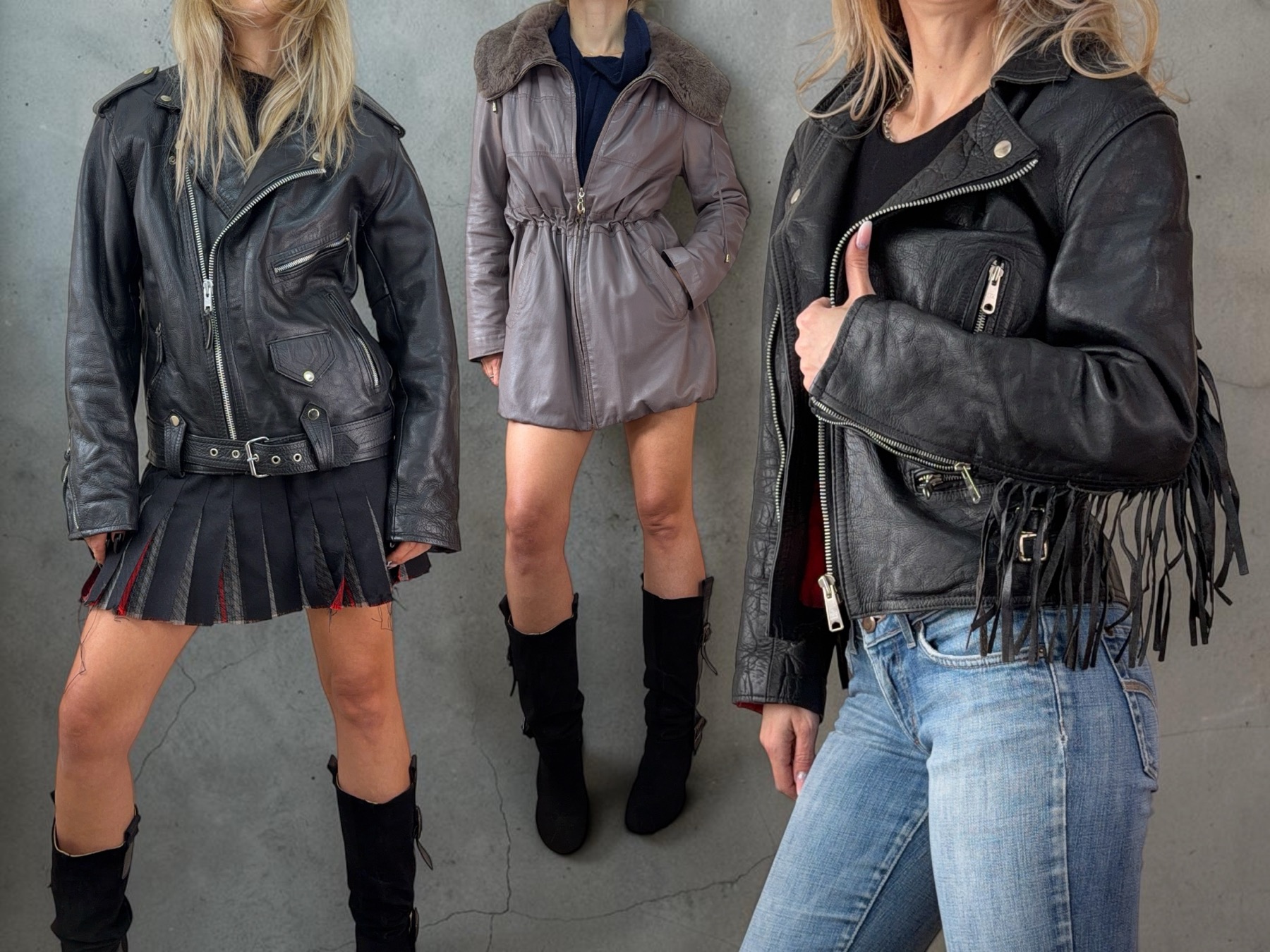
Bikers come in two lengths. The classic one stops at the hip, where the belt sits, so it covers the small of the back on a motorbike. The cropped biker ends higher, at the waist or just above it. It is the fashion version: it shows off a high-waisted skirt or jeans, and it looks good open or zipped over a slim top.
How they became fashion
The biker went from workwear to rebellion in one film. In The Wild One (1953) Marlon Brando plays the leader of a motorcycle gang in a Schott Perfecto, and a generation of teenagers wanted one. James Dean and Elvis wore leather jackets too, and in the 1950s some American schools banned them.
Then the music took it over. In the late 1970s the Ramones wore black bikers on stage and on their album covers, with ripped jeans and sneakers, and punk made the jacket a uniform. Joan Jett and Debbie Harry wore them too. At the end of Grease (1978), Olivia Newton-John’s Sandy turns up in a black leather jacket, and that is the moment everyone remembers.
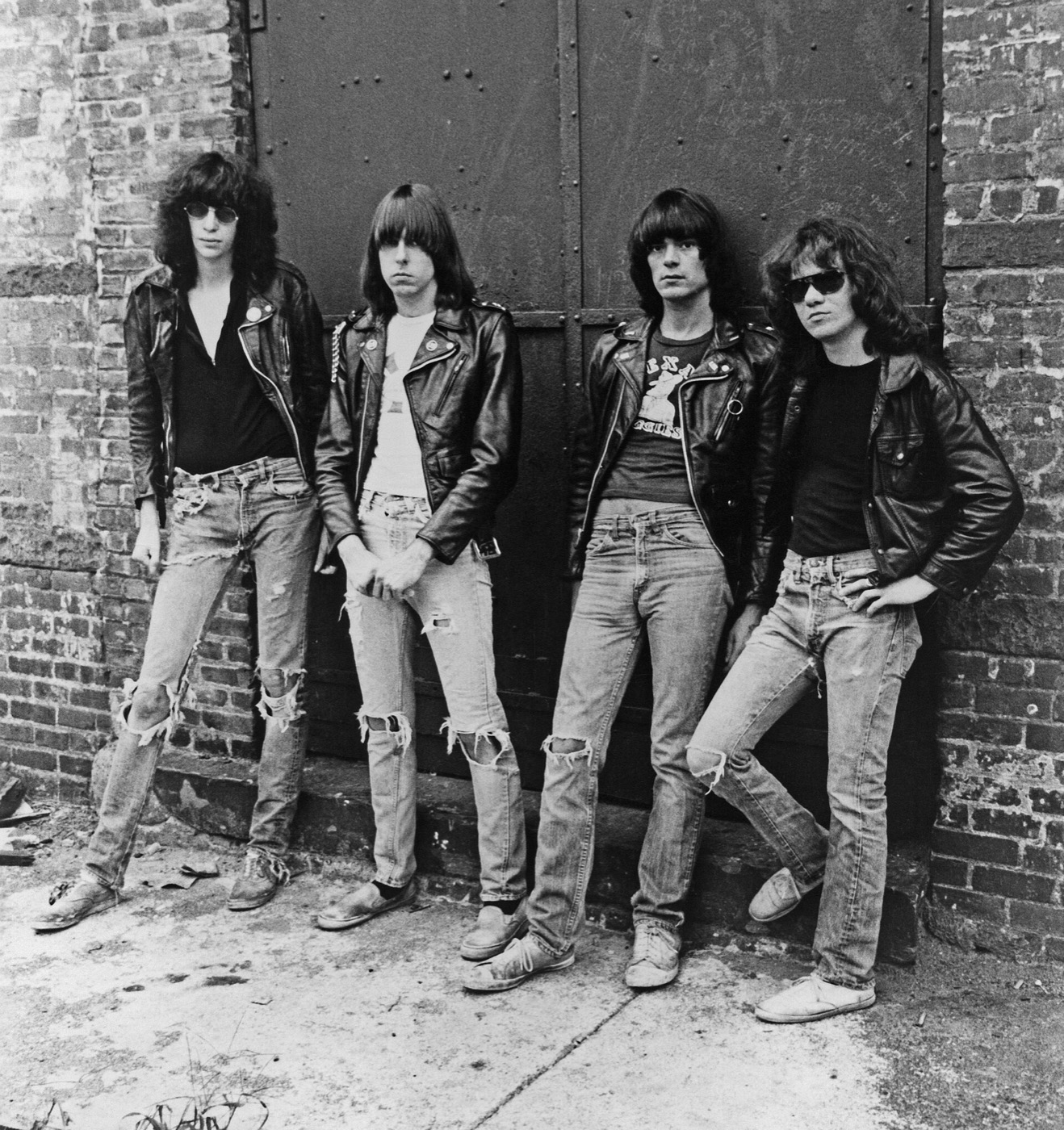
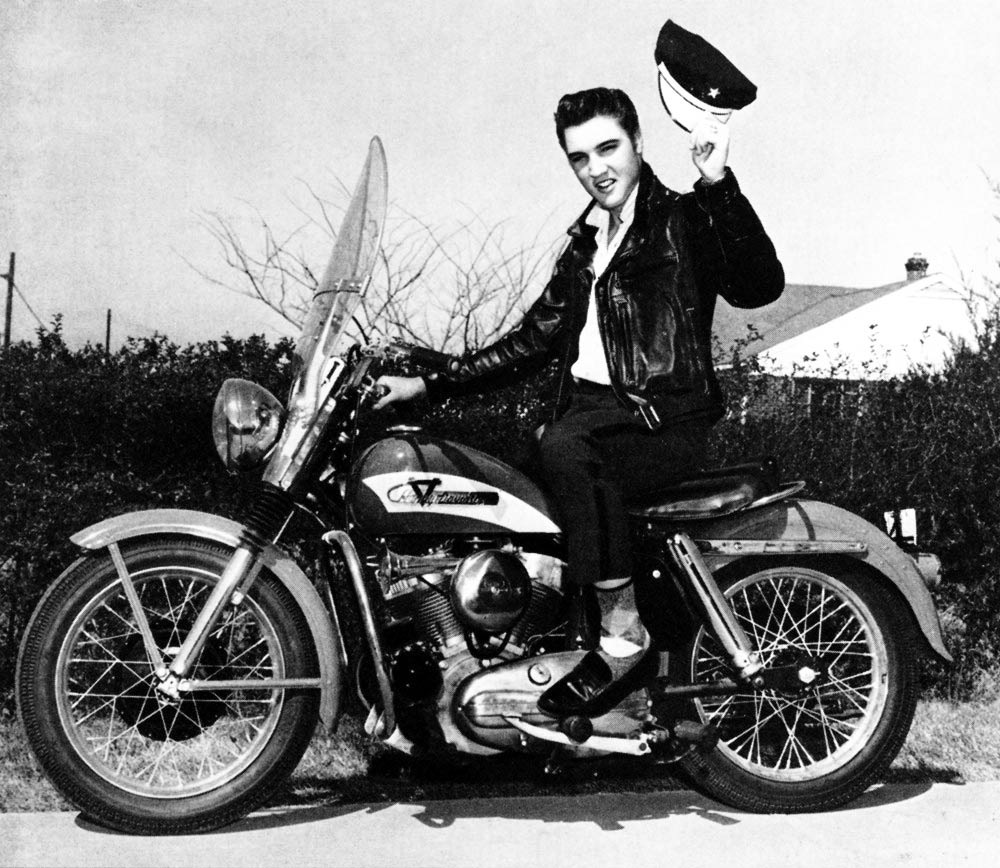
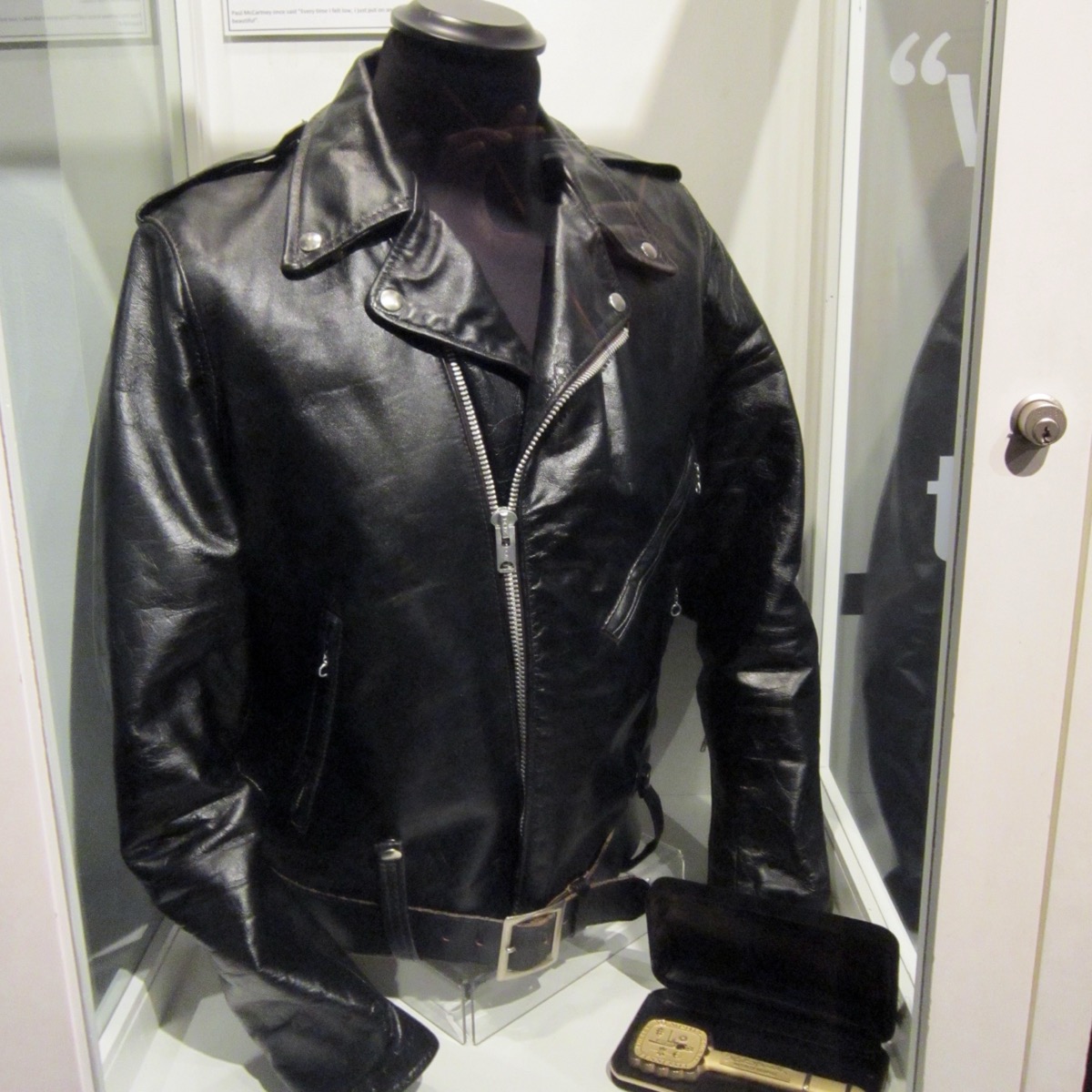
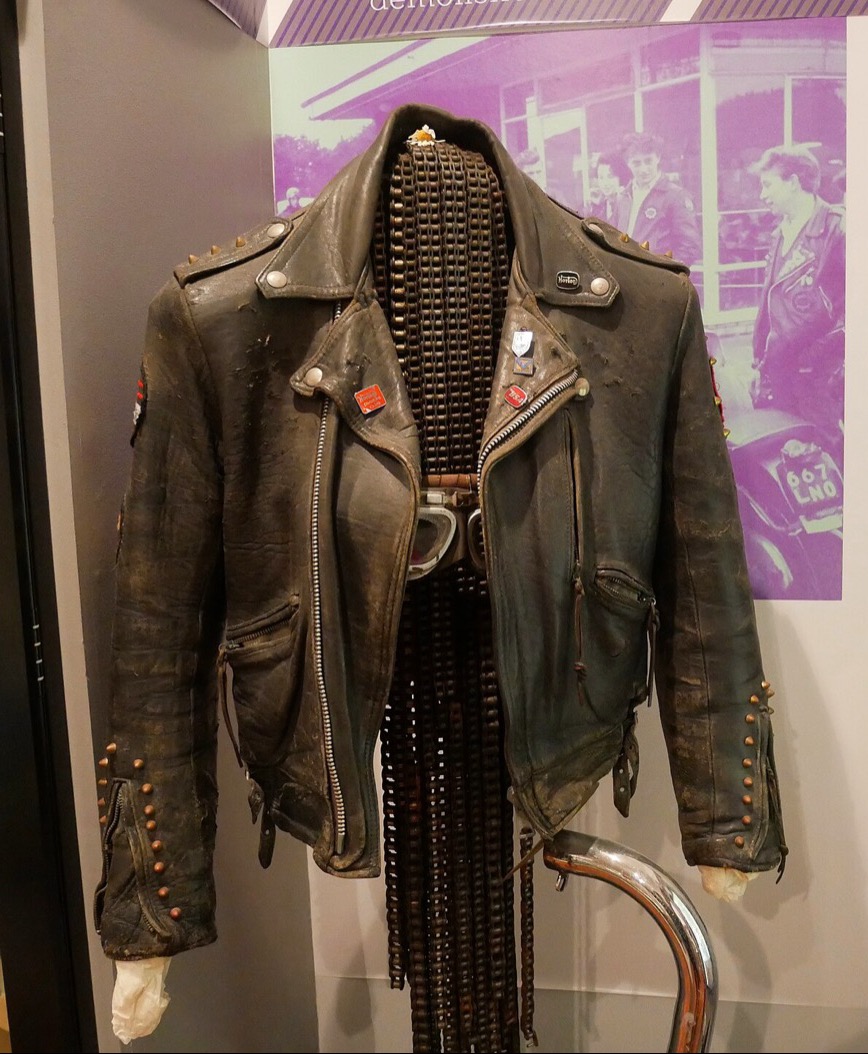
The flight jacket had its film moment in Top Gun (1986), with Tom Cruise in a brown leather jacket covered in patches. In the 90s the black biker became part of off-duty model style, and Kate Moss made it look easy over a slip dress or with skinny jeans.
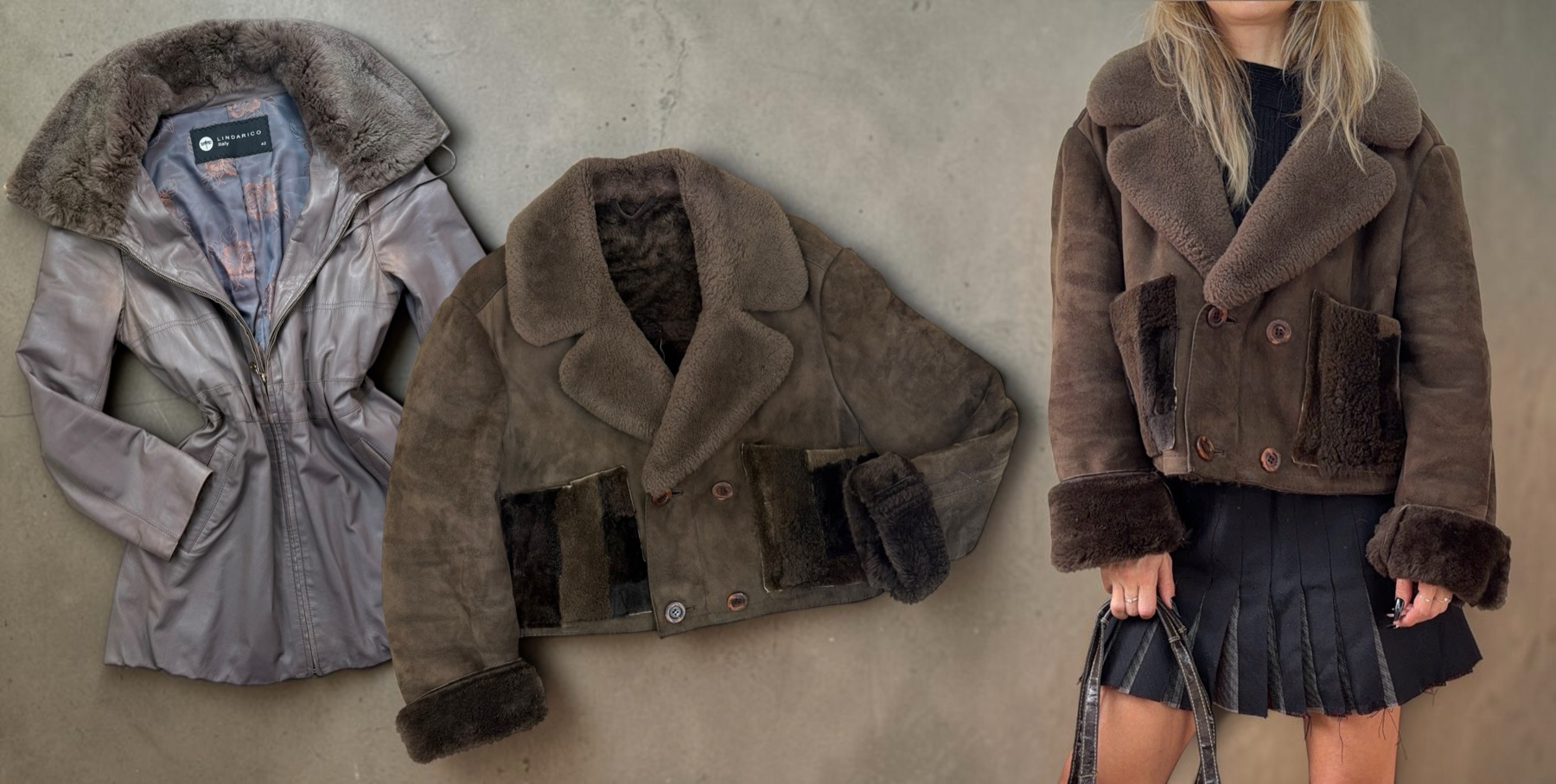
The sheepskin aviator came back in a big way in autumn 2010, when Christopher Bailey based Burberry’s winter collection on the label’s archive aviator jackets: cropped, oversized, belted, in brown and beige shearling. The high street copied it for years, and that is why so many cropped aviators turn up in vintage now.
Aviator, biker or bomber: how to tell them apart
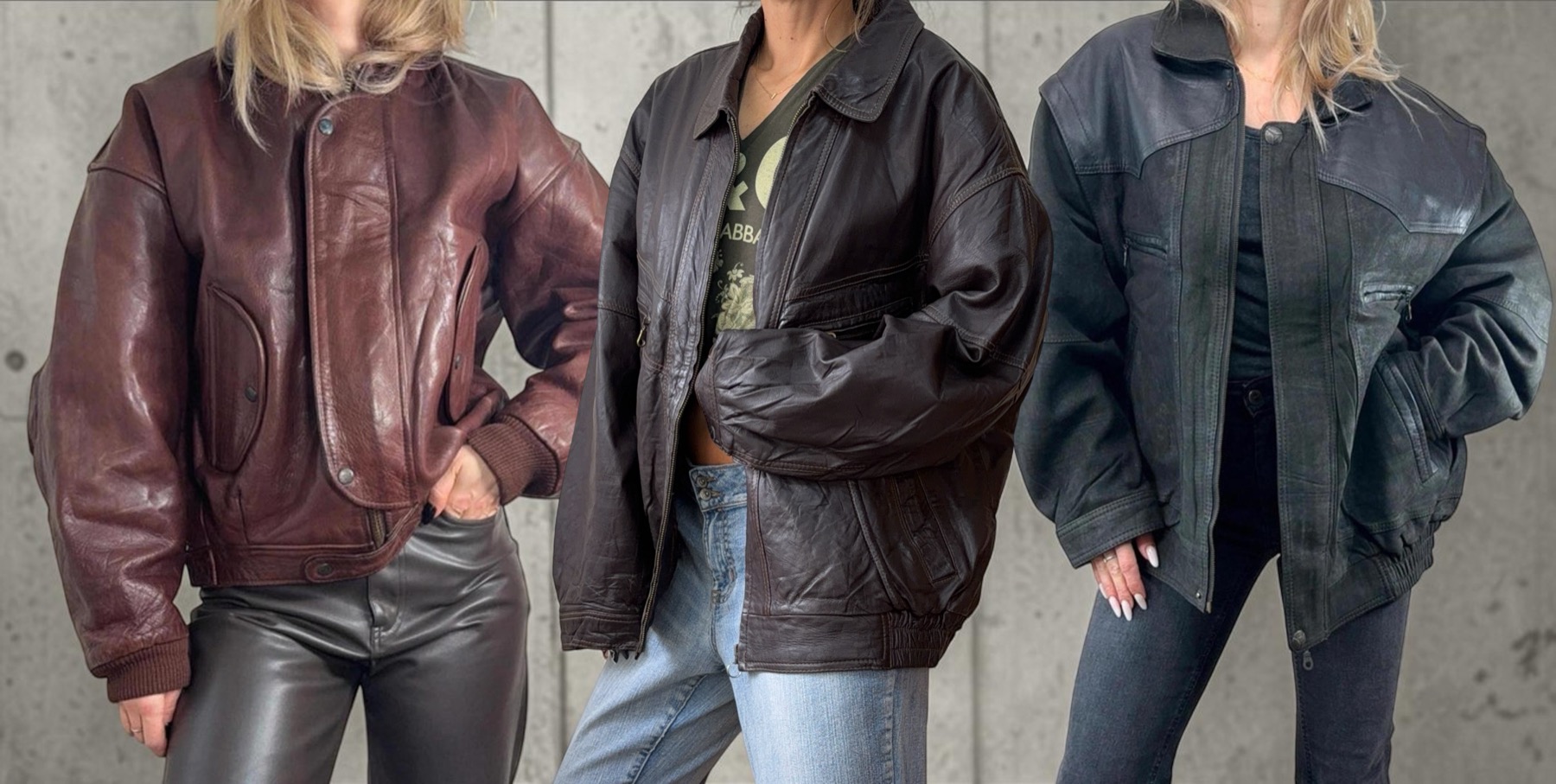
- Aviator: sheepskin or shearling, fleece inside and suede or leather outside, a big fleece collar, often straps or a belt at the collar and waist. Usually brown or tan. Hip length, cropped or longline.
- Biker: smooth leather, an off-centre zip, wide lapels with snaps, a belt at the hem, zips at the cuffs and pockets. Usually black, cut close to the body and short at the waist.
- Bomber: a straight front zip, ribbed knit at the cuffs and hem, a shirt collar or a ribbed one. The leather A-2 is a bomber; so is the nylon MA-1 from the 1950s.
- Leather trench: a long coat, double-breasted, with a belt, epaulettes and a flap at the shoulder, cut in leather or suede instead of cotton gabardine.
Sellers mix the names up all the time, so look at the details, not the title. A cropped sheepskin jacket with a zip and a belt may be listed as a biker, an aviator or a bomber. If it has a fleece lining and a big fleece collar, it behaves like an aviator. If you are trying to decide between an aviator and a long shaggy coat, my Penny Lane and Afghan coat guide explains the difference.
Longline aviator or leather trench?
An aviator can be long. A longline aviator, sometimes sold as an aviator coat, keeps the big fleece collar and the fleece lining and simply runs down to the knee. It is still a sheepskin coat, made for warmth.
A trench is a different coat with a different story. It comes from the coats British officers wore in the trenches of the First World War, and you know it by the double-breasted front, the belt, the epaulettes and the storm flap at the shoulder. Cut one in leather or suede and you have a leather trench, a favourite of the 70s and of the late 90s, when Keanu Reeves wore a long black one in The Matrix (1999). Cut one in sheepskin and it is a shearling trench: warm like an aviator, shaped like a trench.
A leather trench fits like a coat, not like a biker. It is meant to go over a jacket or a knit, so most of them have room in the body, and the shoulders are the measurement to check.
Real leather or faux?
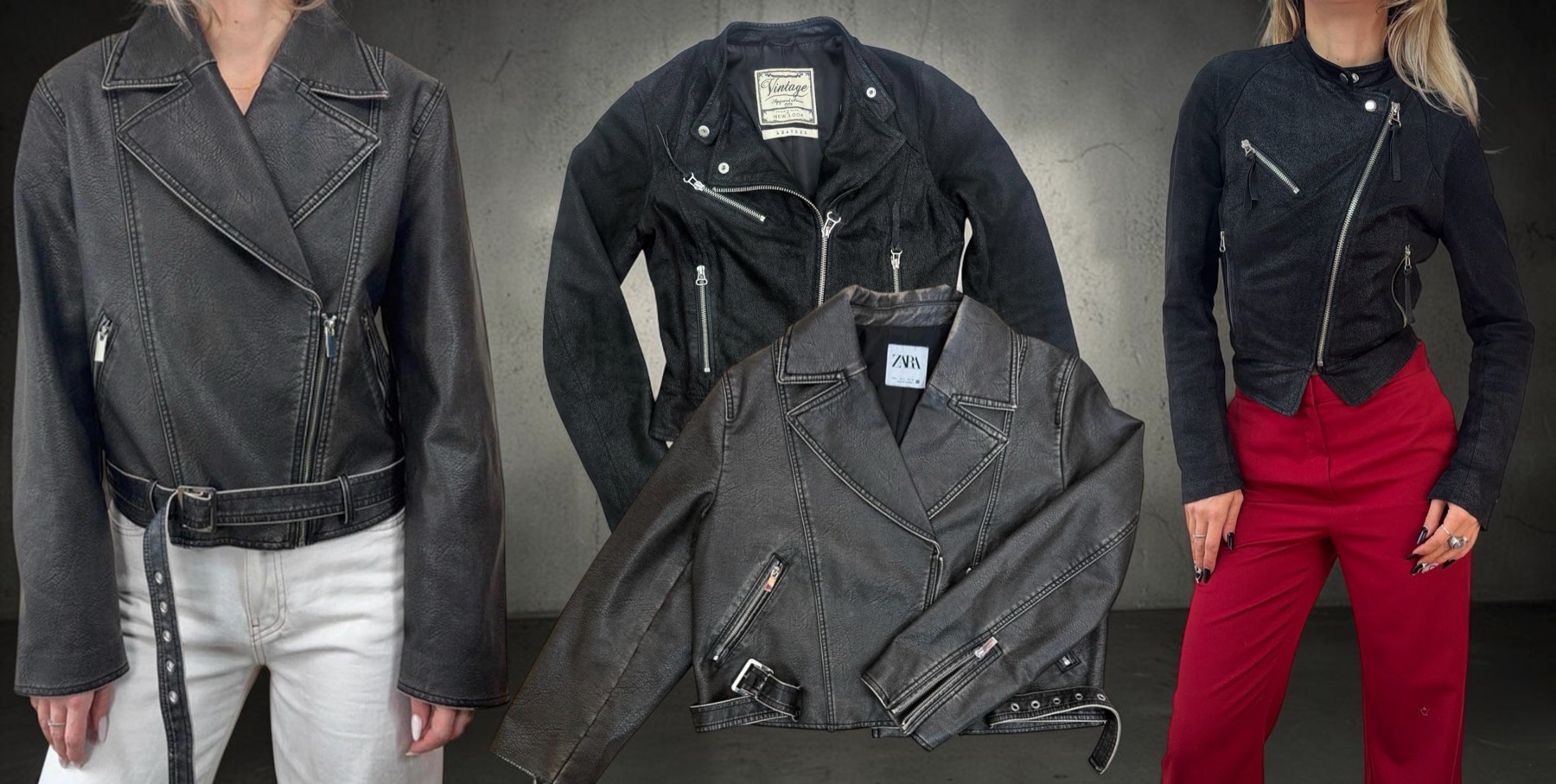
Start with the label. “Genuine leather”, “lamb leather”, “cow leather” or “100% leather” on the composition label means real leather. “PU”, “polyurethane” or “100% polyester” with a coating means faux. If the label has been cut out, the jacket can still tell you:
- The edge. Look at the inside of a pocket opening or a facing. Real leather has a fibrous, suede-like edge. Faux leather shows a woven or knitted fabric under a thin shiny layer.
- The surface. Real leather has small, uneven pores and creases where it has been worn, especially at the elbows. Faux leather has a regular printed grain, and when it ages it peels or cracks in flakes.
- The feel. Real leather warms up in your hands and folds softly. Lambskin is the softest and lightest; cowhide is heavier and stiffer and takes years to break in.
- The smell. Real leather smells like leather, even after decades. Faux smells of plastic or nothing at all.
Faux is not a bad buy, as long as you know that is what you are buying. A good faux biker is light and easy to wear, and some of the best cuts of the 2000s were made in it. For shearling, the test is to part the fleece: real sheepskin shows skin at the roots. More checks, with photos of labels and hardware, are on our authentication page.
If you are buying from the high street, at least choose the version that lasts. Faux leather is plastic, PU or PVC on a fabric backing: it peels and cracks within a few years and cannot be recycled. Real leather can be worn for decades, repaired, conditioned and sold on to someone else. High street labels made real leather pieces too, and those are the ones worth finding second-hand, because they have already been made and still have years left in them.
How a leather jacket sizes
Leather does not stretch in the width the way knitwear does. Lambskin softens and moulds a little at the elbows and shoulders over the first winter, but a jacket that will not close across your chest will not learn to. So the two numbers that matter are the chest and the shoulders. Sleeves can sometimes be shortened; shoulders almost never can.
On the jackets I have measured this season, the label and the fit go apart in two different ways:
- Fitted bikers run small. A Karen Millen lambskin biker labelled UK 8 measures 33 inches round the chest, with 14-inch shoulders. That is a jacket built to sit close over a T-shirt, not over a jumper.
- Shearling runs small for a different reason. A longline sheepskin aviator marked UK 16 measures 44 inches round the chest, but the fleece takes up room inside. It fits a woman’s UK 12 to 14 or a man’s medium.
- 90s leather runs big. Many leather jackets from the 1990s were cut oversized, with dropped shoulders and room in the body. A grey Brooke Saddler jacket labelled M measures 45 inches round the chest.
To check a jacket, lay one of your own that fits well flat on a table and measure it armpit to armpit, then double it. Compare that with the listing. For a fitted biker over a T-shirt, look for 2 to 3 inches more than your bust; for an aviator over a chunky knit, 4 to 6. Our Will it fit? tool does this sum for you, and the size guide shows how we measure every piece.
Looking after vintage leather and shearling
- Never in the washing machine. Wipe smooth leather with a barely damp cloth, and let it dry at room temperature, never on a radiator or in the sun.
- Feed it. Once or twice a year, rub in a little leather conditioner with a soft cloth. Dry, older leather drinks it up, and cracks are much easier to prevent than to fix.
- Rain. If it gets soaked, blot it, fill the shoulders with a towel and let it dry slowly on a wide hanger.
- Suede and shearling. Brush the suede with a soft brush, use a suede eraser on marks, and take serious stains to a specialist leather cleaner.
- Storage. A wide wooden hanger, a cotton cover rather than plastic, and space in the wardrobe so the collar is not crushed.
Our guide to washing vintage clothes and reading care labels explains the symbols on the label, and the Penny Lane guide has more on suede and shearling.
How to wear it
- Biker over a dress. A black biker over a slip dress or a mini is the easiest night-out outfit there is. More ideas in our night out outfits guide.
- Biker with jeans and boots. Low-rise flares or straight jeans, a white tee, knee-high boots. That is the Y2K version, and our Y2K guide has the rest of the look. For the boots, see our knee-high boots.
- Aviator over knitwear. A shearling aviator is a winter coat. Wear it over a chunky knit or a polo neck, with jeans or a midi skirt, and turn the collar up.
- Belt it, or leave it open. A cropped aviator looks best open with high-waisted trousers; a longline one can take a belt at the waist.
What is on my rail now
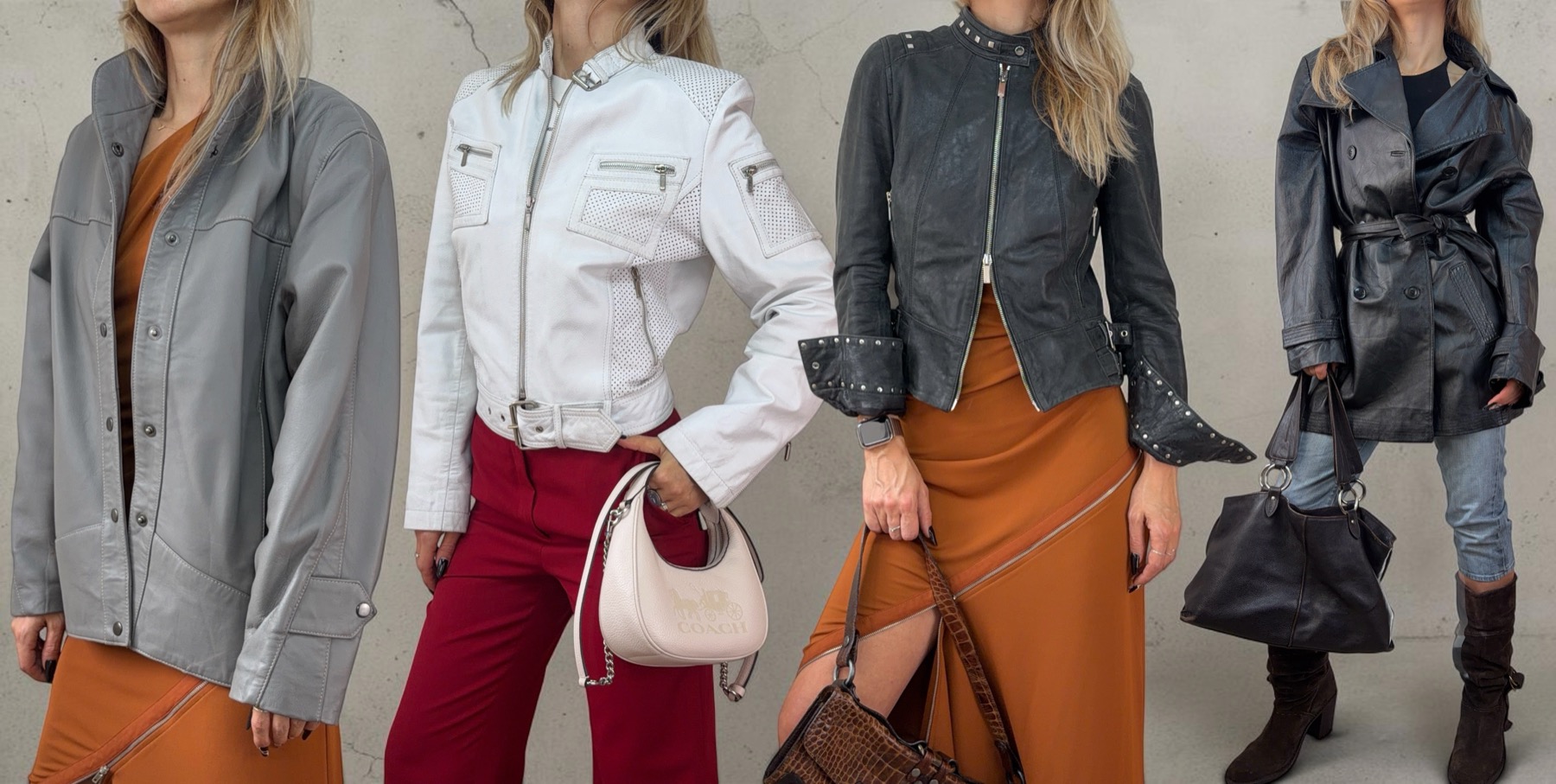
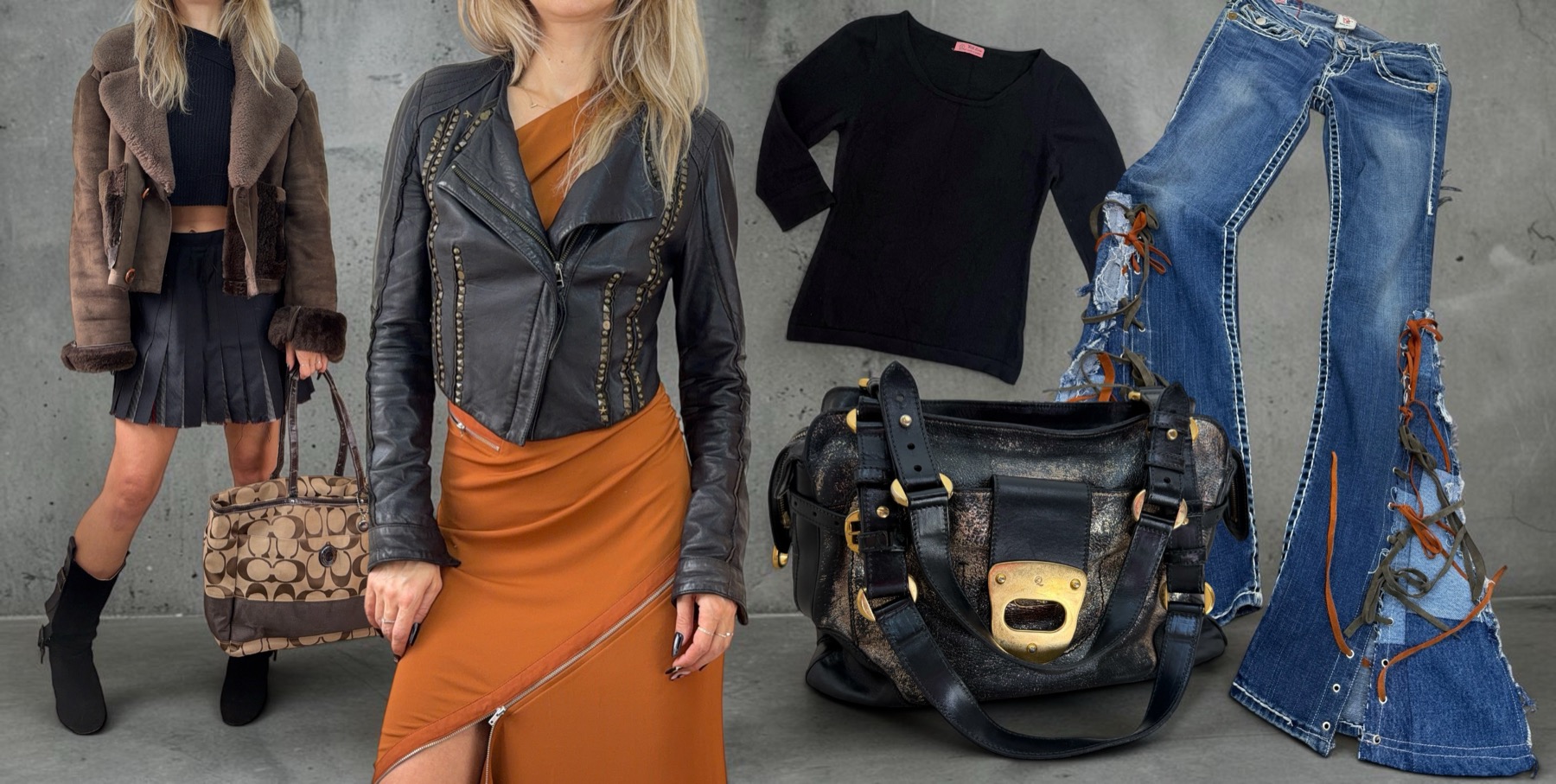
- Karen Millen black lambskin biker with studs and buckle straps, UK 8
- Brooke Saddler 90s dove grey leather jacket, oversized, pleated back, UK 10 to 12
- Frooty Beauty white perforated leather biker, UK 14
- New Look black suede leather biker with a glossy croc finish, UK 10
- Sophie B black faux leather waterfall jacket, UK 10
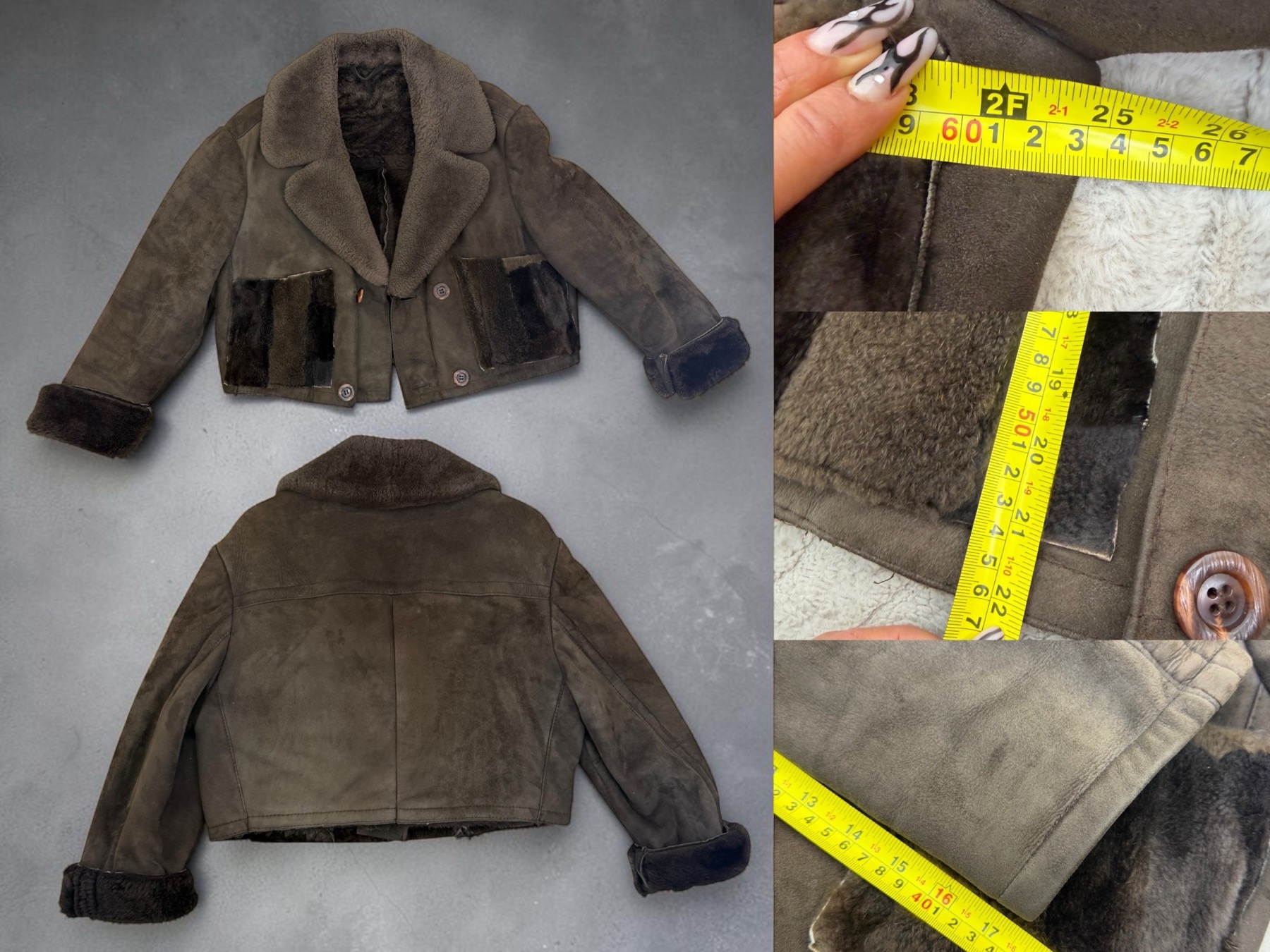
- Cropped 90s sheepskin aviator in chocolate suede, with patchwork fur pockets I added myself, UK 12 to 14
- Longline aviator sheepskin coat, women’s UK 12 to 14 or men’s M
- Allander for House of Fraser brown suede and shearling coat, 90s, men’s M
- New York & Company black leather double-breasted trench coat, men’s XL, also women’s UK 16 to 18
- Beth Terrell black suede trench coat, longline and oversized, UK 14 to 16
- Illusion 90s olive green leather longline coat, UK 12 to 14
See all our women’s leather jackets, the shearling and Afghan coats, our trench coats and the rest of our outerwear. Every piece is measured by hand and photographed on a real person.
Questions people ask
What is the difference between an aviator and a bomber jacket?
An aviator is made of sheepskin, with the fleece inside and a big fleece collar. A bomber has a straight zip and ribbed knit cuffs and hem. It can be leather, like the A-2, or nylon, like the MA-1.
Can an aviator jacket be long?
Yes. A longline aviator keeps the sheepskin, the fleece lining and the big collar, but reaches the knee. It is not the same as a leather trench, which is double-breasted and belted, with epaulettes, and usually has no fleece inside.
Is a biker jacket the same as a Perfecto?
The Perfecto is the original. Irving Schott designed it in New York in 1928, and today it is a Schott model name. “Biker jacket” is the general name for any jacket built on that plan: an off-centre zip, snap-down lapels and a belted hem.
How can I tell real leather from faux leather?
Check the composition label first. Without one, look at a cut edge: real leather is fibrous, while faux shows fabric under a coating. Real leather also has uneven pores, softens with wear and smells of leather. Faux peels or cracks as it ages.
Do leather jackets stretch?
Only a little. Lambskin moulds at the elbows and shoulders over time, but the chest will not grow. Buy a leather jacket that closes comfortably over what you will wear under it.
How should a shearling aviator fit?
Expect it to wear about a size smaller than the label, because of the fleece. Go by the chest measurement and allow 4 to 6 inches over your bust if you will wear a jumper under it.
How do I clean a vintage leather jacket?
Wipe it with a barely damp cloth, let it dry slowly away from heat and condition it once or twice a year. Suede and shearling need brushing and a specialist cleaner for stains. Never use the washing machine.